

Last Updated on 7 days ago by Shraddhanvita
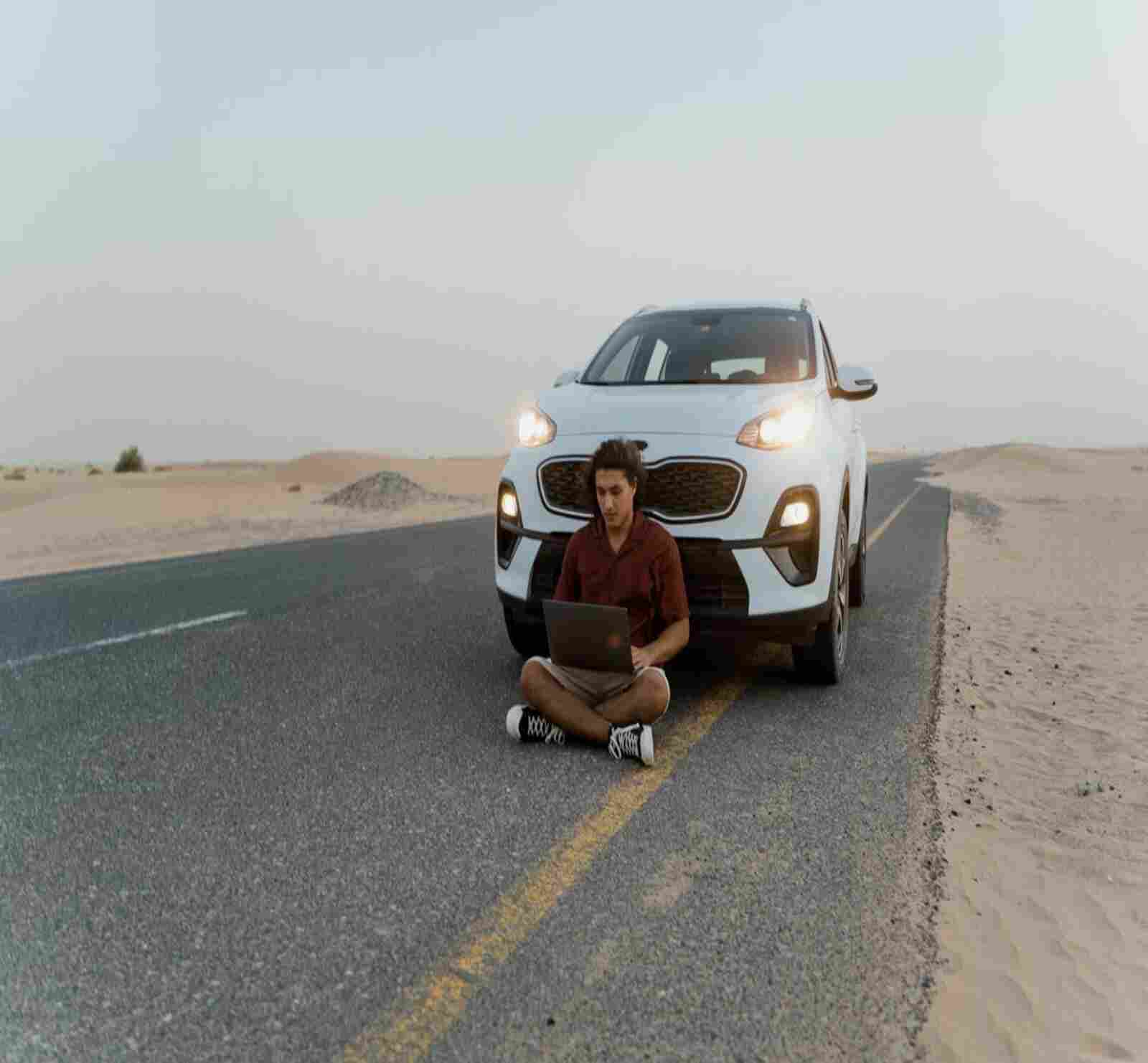
Somewhere between the laptop-on-a-beach photos and the “which co-working space has the best wifi” threads, there’s a much less glamorous logistical question digital nomads eventually have to answer: what do you do with your car when home base changes every few months? Unlike a backpack or a laptop bag, a car can’t just come with you on a flight. For the growing number of Americans living this way, figuring out how digital nomads ship their cars when relocating frequently has become its own quiet skill — part planning, part budgeting, part knowing which shortcuts actually work.
This guide breaks down the real strategy behind frequent-mover auto shipping, built for anyone treating their car as a semi-permanent fixture of a location-independent life rather than a one-time move.
Get your instant quote with Haulin.ai in under 40 seconds — no calls required.
Get a Free QuoteQuick Summary
- Digital nomads increasingly keep a vehicle rather than go car-free, especially those working from multiple U.S. cities rather than internationally
- The core strategy is treating auto transport as a recurring line item, not a one-off event, which changes how nomads book and budget for it
- Vehicle registration and domicile decisions matter as much as the shipping itself, since most states expect a car to be registered where its owner is legally domiciled
- Many nomads settle into a rotating regional pattern rather than truly random moves, which makes planning shipments far more predictable
- Open transport is the default for most frequent movers, with enclosed reserved for higher-value vehicles
- Haulin.ai supports nomads with fast, repeatable quotes so shipping doesn’t have to be re-negotiated from scratch every time a move comes up
Why This Is a Growing Question
Digital nomadism has moved from niche to mainstream fast. According to MBO Partners’ 2025 State of Independence research, 18.5 million American workers currently describe themselves as digital nomads, and the report notes a rising share now hold traditional full-time jobs rather than freelance work, meaning many are balancing employer expectations with a mobile lifestyle rather than building it entirely around freelance flexibility. That combination — a steady income plus a location-independent schedule — is exactly the profile of someone who’s more likely to keep a car than someone backpacking between hostels.
For nomads staying within the U.S. and moving between cities every few months, a car is often more practical than public transit or rideshare in many mid-sized cities and towns, especially outside major metro hubs. That means the shipping question isn’t hypothetical — it’s a recurring part of the lifestyle.
How Digital Nomads Actually Ship Their Cars
Frequent movers tend to fall into one of a few patterns, and most successful ones land on a repeatable system rather than reinventing the process every time:
1. Regional rotation instead of random hopping. Most nomads aren’t bouncing between Maine and Arizona every month. They tend to settle into a loose regional circuit — say, the Southeast in winter, the Mountain West in summer — which makes shipping routes predictable and often cheaper than one-off long-haul moves.
2. Booking shipping around lease and sublease timelines. Since most nomads work on 30-to-90-day housing stints, transport gets booked to land the car within a day or two of arrival, minimizing both storage costs and the awkward gap of being car-less in a new city.
3. Using the same provider repeatedly. Just like flippers benefit from carrier familiarity, nomads who ship every few months often stick with one platform so quotes, documentation, and pickup logistics don’t have to be rebuilt from zero each time.
4. Occasionally driving short legs and shipping the long ones. Some nomads drive between nearby destinations and only book transport for longer jumps — say, coast to coast — treating shipping as a tool for the expensive miles rather than every move.
For the mechanics of how a typical shipment unfolds, Haulin.ai’s guide to the car shipping process from quote to delivery covers what to expect at each stage.
Frequent Mover Auto Shipping Strategy: Building a System
A one-off shipper can afford to figure things out as they go. A nomad shipping a car three, four, or more times a year benefits from an actual system:
- Standardize your paperwork. Keep title, registration, and insurance documents digitized and ready, since you’ll be producing them repeatedly
- Track your average per-move cost. Knowing your typical price per mile or per route helps you spot a bad quote immediately, rather than re-researching pricing every time
- Build a buffer into your travel calendar. A few days of slack between move-out and move-in dates protects against carrier scheduling variability
- Default to open transport unless the vehicle is high-value. For most standard vehicles, open transport keeps recurring costs manageable; see Haulin.ai’s open vs. enclosed transport guide for when enclosed makes sense
- Understand realistic delivery windows so shipments align with lease start dates; Haulin.ai’s guide on auto transport delivery timelines breaks this down by distance
Ship Your Car Wherever Home Base Is Next
Consistent, transparent quotes every time you move — no starting from scratch.
The Part Most Nomads Underestimate: Registration and Domicile
Shipping the car is often the easy part. The harder question is where the vehicle should legally be registered, since most states expect a car to be registered in the state where its owner is domiciled — their permanent legal home — not necessarily wherever they happen to be living for a few months.
Nomads generally handle this one of two ways: they maintain a fixed domicile state (often a state with favorable vehicle registration or tax rules) and register the car there permanently, treating every other location as temporary; or, if they do establish permanent residency somewhere new, they follow that state’s registration timeline. According to USA.gov’s State Motor Vehicle Services guidance, registration, titling, and license plate requirements are handled at the state level, so the specific rules and deadlines genuinely vary depending on where a nomad is domiciled versus just staying temporarily.
For a deeper look at how this plays out for a permanent relocation, Haulin.ai’s guide to moving to a new state and car registration is a useful companion piece to this frequent-mover strategy.
Open vs. Enclosed: What Most Nomads Choose
For the average sedan, crossover, or daily driver, open transport is the standard and most cost-effective choice for repeat shipping. Enclosed transport becomes worth considering only in specific cases:
- The vehicle is a classic, exotic, or otherwise high-value car
- The nomad is moving through regions with harsh weather (heavy snow, severe storms) during the shipment window
- Resale value protection matters more than usual, such as ahead of a planned sale
For most frequent movers optimizing for recurring cost over the course of a year, open transport remains the default, with occasional enclosed bookings reserved for weather-sensitive routes or higher-value vehicles.
Text us for a quick estimate on your next move. Text Haulin.ai →
Budgeting for Recurring Shipments
Unlike a one-time mover, nomads need to think about shipping as an ongoing cost of the lifestyle, not a single line item. A few habits help:
- Estimate an annual shipping budget based on expected move frequency, using Haulin.ai’s cost guide and coast-to-coast pricing breakdown as baselines
- Watch for seasonal fuel surcharges, which can shift recurring costs; see Haulin.ai’s explainer on diesel spikes and shipping fuel surcharges
- Avoid unusually cheap quotes from unfamiliar providers each time — inconsistent providers often mean inconsistent pricing and hidden fees; Haulin.ai’s guide on what cheap quotes don’t tell you explains what to watch for
- Factor in expedited costs only when truly needed — most nomad moves have enough lead time that standard shipping works fine; see the full breakdown of when expedited shipping is worth paying for
Common Mistakes Frequent Movers Make
- Booking transport too close to the move-out date, leaving no buffer if a carrier’s schedule shifts
- Re-shopping for a new provider every single move, which resets the learning curve on pricing, documentation, and expectations each time
- Ignoring domicile and registration requirements until a renewal notice or a traffic stop forces the issue
- Defaulting to enclosed transport out of caution when it isn’t needed, unnecessarily inflating a recurring cost
- Not accounting for storage or gap days between when a lease ends and the new one begins, which can leave a car (or its owner) without a clear plan for a few days
Why This Lifestyle Is Reshaping Car Shipping Demand
The shift toward remote and location-independent work isn’t slowing down. Broader data on the remote workforce shows the underlying trend clearly: more Americans are working in ways that decouple where they live from where their job is based, and a meaningful share of that group is choosing to stay mobile rather than settle immediately. For auto transport providers, that means demand is shifting from purely one-time relocations toward recurring, relationship-based shipping — customers who need a provider they can call again in three months, not just once.
Haulin.ai’s AI-powered transparent pricing is built with exactly this kind of repeat customer in mind, so returning nomads get consistent, predictable quotes rather than starting from scratch with every move.
FAQs
How do digital nomads ship their cars when relocating frequently? Most rely on a repeat auto transport provider, book around their lease timelines, and default to open transport for cost efficiency, treating shipping as a recurring part of their moving budget rather than a one-time task.
Where should a digital nomad register their car if they move constantly? Generally in their state of legal domicile — their fixed, permanent home base — rather than wherever they happen to be staying temporarily. Requirements vary by state, so checking directly with the relevant DMV is important.
Is it cheaper to drive the car yourself instead of shipping it? It depends on the distance, your time value, and vehicle wear considerations. For longer or more frequent moves, shipping often works out more practical once time, fuel, lodging, and mileage are factored in.
How far in advance should a nomad book car shipping? Booking one to two weeks ahead of a planned move gives the most flexibility and pricing options, though Haulin.ai can also accommodate tighter timelines when needed.
Do frequent movers need enclosed transport? Most don’t — open transport is standard for everyday vehicles. Enclosed is worth considering for high-value cars or moves through severe weather.
Can I use the same auto transport company every time I move? Yes, and many frequent movers do exactly that, since it simplifies documentation, builds familiarity with pricing, and often speeds up the booking process.
Key Takeaway
Shipping a car every few months isn’t the same challenge as a single cross-country move — it’s a recurring logistics problem that rewards planning and consistency. Digital nomads who treat auto transport as a repeatable system, stay on top of registration and domicile requirements, and default to cost-efficient open transport tend to spend less time and money on shipping overall than those who re-solve the problem from scratch every time.
Ready to Ship Your Car?
Get a quote now or call our team to get started today.
Text us: 833-700-8382 | Call us: 737-339-4440

**About the Author — Shraddhanvita Tiwari**
Shraddhanvita Tiwari is an auto transport industry expert specializing in vehicle shipping, auto transport logistics, carrier networks, and the U.S. car shipping market. Her experience in the industry gives her a practical perspective on the factors that influence auto transport pricing, carrier selection, shipping timelines, and the overall vehicle shipping experience. At Haulin.ai, she contributes industry-focused insights designed to make car shipping easier to understand for consumers and businesses.