
Last Updated on 5 months ago by Shraddhanvita
Quick Answer
Long distance car shipping — transporting a vehicle more than 500 miles, typically across multiple states or coast to coast — costs $700–$1,800 for open transport and $1,100–$2,500 for enclosed, depending on exact distance, vehicle size, and timing. Transit time ranges from 3–10 days depending on route. The most common long-distance routes are California to New York, Florida to New York, and Texas to California. Haulin.ai provides instant quotes for any long-distance route in the US.
What Is Long Distance Car Shipping?
Long distance car shipping — also called interstate car transport or cross-country vehicle shipping — refers to moving a vehicle over distances that make self-driving impractical or undesirable. Most industry definitions treat 500+ miles as “long distance,” though any cross-state move qualifies regardless of exact mileage.
Long-distance shipping is common across a wide range of situations:
- Relocating to a new state — job transfers, retirement moves, or major life changes
- Buying a car online from another state — the growth of remote car buying means buyers regularly purchase from dealers or private sellers across the country
- Snowbird seasonal moves — retirees transporting vehicles between northern summer homes and southern winter residences
- Military PCS moves — service members relocating to new bases
- College students — shipping a car to school at the start of term
- Estate vehicles — moving inherited vehicles from another state
- Auction purchases — vehicles won at distant auction facilities
Long Distance Car Shipping Costs (2026)
| Route | Distance | Open Transport | Enclosed Transport |
|---|---|---|---|
| Regional interstate | 500–800 mi | $600–$900 | $950–$1,400 |
| Long haul | 800–1,500 mi | $800–$1,200 | $1,200–$1,800 |
| Cross-country | 1,500–2,500 mi | $1,000–$1,500 | $1,500–$2,200 |
| Coast to coast | 2,500+ mi | $1,200–$1,800 | $1,800–$2,500 |
For a detailed breakdown of exactly what you’re paying for in each quote, see the full car shipping cost breakdown.
What drives long-distance shipping costs:
- Distance — the single biggest factor. Rates don’t increase linearly; cross-country moves cost approximately 2–2.5x regional moves, not 5x.
- Route popularity — high-volume corridors (CA-FL, NY-TX) have more carrier availability and typically lower rates. Rural origins and destinations add cost due to limited carrier access.
- Vehicle size — full-size trucks, SUVs, and vans take more trailer space and weigh more. Expect 15–25% higher rates than a compact sedan on the same route.
- Timing — peak seasons (summer, January snowbird moves) increase demand and prices. Flexible pickup dates allow carriers to optimize their loads, lowering your cost.
- Transport type — enclosed is 40–70% more expensive than open but provides weatherproof, fully covered transport critical for collector and luxury vehicles.
- Fuel prices — carriers pass diesel cost fluctuations through to rates. How fuel surcharges affect shipping costs explains this dynamic.
Open vs. Enclosed for Long Distance Shipping
For long-distance moves, the open vs. enclosed decision matters more than on short regional routes:
Open transport is appropriate for:
- Standard used vehicles and daily drivers
- New vehicles with factory paint in good condition
- Any vehicle where absolute protection isn’t worth the premium
- Budget-conscious moves where the shipping cost is already a significant portion of the vehicle’s value
Enclosed transport is worth the premium for:
- Classic, collector, and vintage vehicles
- Luxury and exotic cars where paint condition affects resale value
- Vehicles with aftermarket paint, body kits, or custom work
- Any vehicle worth over $50,000 where the enclosed premium is proportionally small
Read the full open vs. enclosed car transport comparison to make the right call for your vehicle.
How Long Distance Car Shipping Works: Step by Step
Step 1: Get a Quote
Use Haulin.ai’s instant quote tool at haulin.ai. Enter your origin ZIP, destination ZIP, vehicle type, and preferred transport (open or enclosed). You’ll get a real quote — not an estimate that changes at booking.
Step 2: Book Your Shipment
Once you confirm the quote, Haulin.ai dispatches a carrier from its vetted network. Most long-distance routes have carrier pickup availability within 1–4 business days. Expedited dispatch is available if you need faster pickup.
Step 3: Prepare Your Vehicle for Pickup
Preparing your car for long-distance shipping is worth doing thoroughly:
- Fuel at ¼ tank or less (reducing weight and fire risk)
- Remove all personal items (not covered by carrier insurance)
- Document the car’s current condition with photos — every panel, all four tires, interior
- Disable aftermarket alarms (a dead battery after 7 days in transport is preventable)
- Provide a spare key so the carrier can reposition the vehicle if needed
- Note any mechanical issues (low clearance, non-working windows) on the BOL
Step 4: Vehicle Pickup and Bill of Lading
The carrier arrives at your origin location and conducts a condition inspection. Both you (or your representative) and the driver sign the Bill of Lading — a legal document that records the vehicle’s pre-transport condition. This is your protection if any damage occurs in transit.
Step 5: Transit
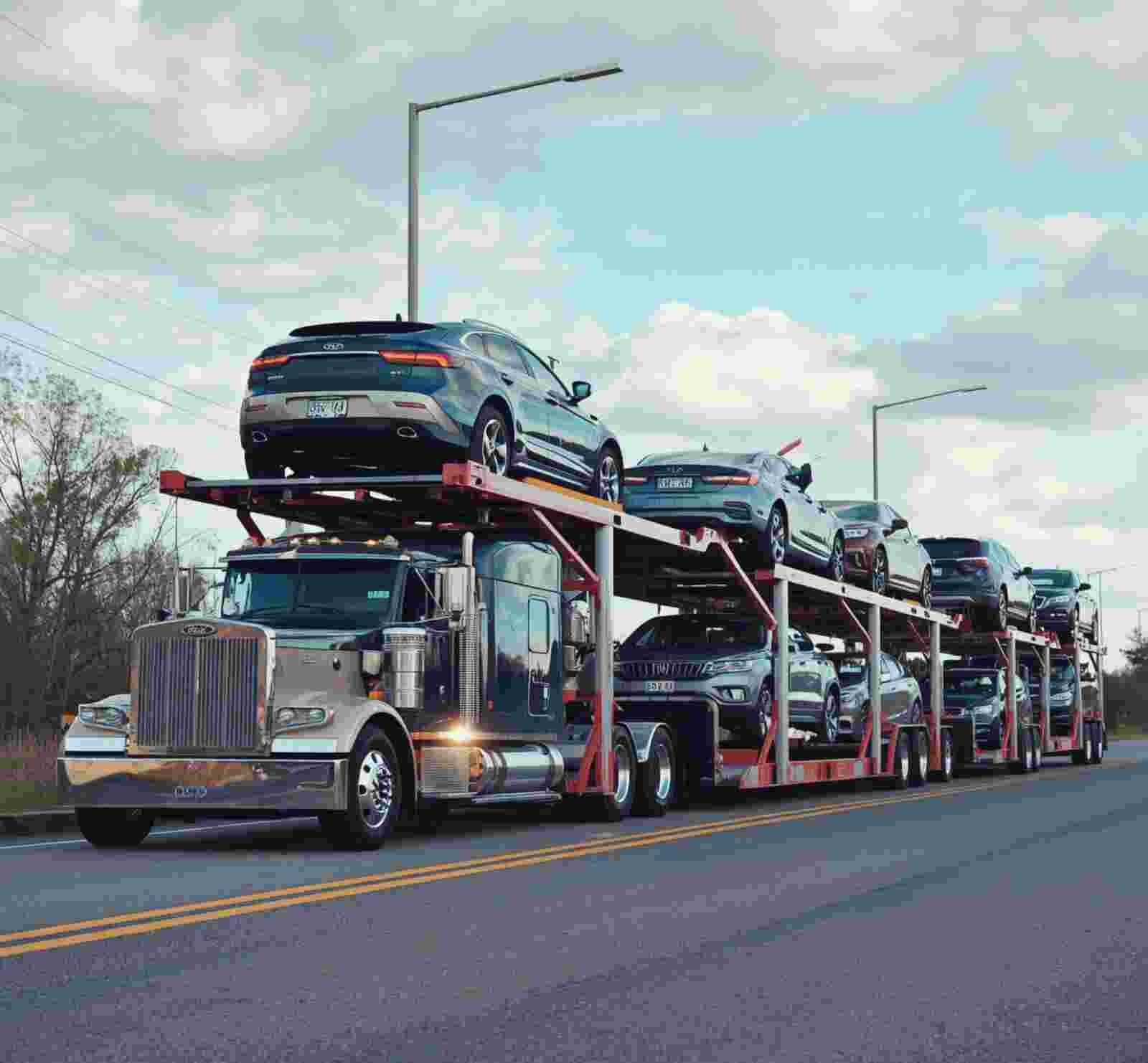
Your vehicle travels cross-country on a carrier typically hauling 6–10 vehicles. Haulin.ai provides real-time tracking so you know where your vehicle is throughout the journey. Standard cross-country transit takes 5–9 days from pickup. For typical auto transport delivery timelines by route, see our full breakdown.
Step 6: Delivery and Inspection
When the carrier arrives at your destination, conduct a thorough condition inspection against the pickup BOL before signing delivery documents. Check every panel in daylight if possible — it’s much harder to document damage after the carrier has left. If anything is different from the pickup condition, note it on the delivery BOL before signing and photograph immediately.
Long Distance Shipping for Common Scenarios
Moving to a New State
Relocating to a new state is the most common reason for long-distance car shipping. Shipping your car during a cross-country move is usually cheaper, safer, and less stressful than driving thousands of miles alone. It also protects your vehicle from the wear and fuel cost of a self-drive. Once delivered, registering your car in a new state has specific requirements and deadlines that vary by state — review them before your move date.
Buying a Car Online from Another State
Remote car buying across state lines is now routine. Whether you bought on eBay Motors, from a dealer’s online inventory, or from a private seller, shipping a car bought online follows the same process — with the added step of confirming title transfer timing with your carrier so the vehicle can be legally driven when it arrives.
Snowbird Seasonal Transport
Snowbirds — retirees who winter in the South and summer in the North — are among the most frequent users of long-distance car shipping. Snowbird car shipping follows predictable seasonal patterns: southbound moves peak October–December, northbound moves peak March–May. Booking ahead of these peaks by 2–3 weeks secures better rates and carrier availability.
Military PCS Moves
Service members on Permanent Change of Station (PCS) orders have specific options for government-funded vehicle transport alongside privately arranged alternatives. Military PCS car shipping compares government transport programs against private options to help service members make the right choice for their situation.
Avoiding Common Long-Distance Shipping Mistakes
The most expensive mistakes in long-distance car shipping are avoidable with preparation:
- Booking based on price alone — the cheapest quote often reflects unreliable carriers, slow transit, or bait-and-switch pricing that changes at pickup. Common auto transport mistakes explains why the lowest quote can end up costing the most.
- Not reading the BOL carefully at pickup — missing pre-existing damage on the BOL means you can’t claim it if the carrier tries to add it post-delivery. Take your time.
- Leaving personal items in the vehicle — carriers are not insured for personal property inside vehicles. Remove everything.
- Waiting until the last minute — expedited dispatch costs significantly more. Last-minute car shipping is possible but expensive. Booking 1–2 weeks ahead typically saves $100–$300.
- Not factoring shipping cost into a remote vehicle purchase — if you’re buying from another state, get a Haulin.ai shipping quote before you finalize the price negotiation. The all-in cost needs to be competitive, not just the purchase price.
Long Distance Car Shipping FAQs
How much does it cost to ship a car cross country?
Coast-to-coast car shipping (2,500+ miles) costs $1,200–$1,800 for open transport and $1,800–$2,500 for enclosed. Routes in the 1,500–2,000 mile range typically run $950–$1,500 for open transport. Get an instant accurate quote at haulin.ai.
How long does cross-country car shipping take?
Cross-country routes (2,000+ miles) typically take 7–10 days from pickup to delivery. Routes of 1,000–1,500 miles take 4–7 days. Regional interstate moves (500–800 miles) typically complete in 2–4 days.
Is it safe to ship a car long distance?
Yes. Reputable carriers maintain full cargo insurance and complete condition documentation at pickup and delivery. The vast majority of long-distance shipments arrive without any new damage. The BOL process provides legal protection if something does go wrong.
Should I use open or enclosed transport for a long-distance move?
For standard vehicles, open transport is safe and significantly cheaper. For luxury, collector, and high-value vehicles, enclosed is worth the premium — especially for long-distance moves where the vehicle is in transit for 7–10 days exposed to road conditions.
Can I put belongings in my car during long-distance shipping?
No. Carriers are not insured for personal property. Items left in the vehicle are not covered and can shift during transport. Remove everything except the spare tire and factory equipment.
What is the cheapest way to ship a car long distance?
The cheapest legitimate option is open transport with flexible pickup dates (3–5 day window rather than a specific date). This allows carriers to optimize their loads and offer better rates. Avoid brokers who offer dramatically below-market quotes — these consistently result in delays, no-shows, or price increases at pickup.

**About the Author — Shraddhanvita Tiwari**
Shraddhanvita Tiwari is an auto transport industry expert specializing in vehicle shipping, auto transport logistics, carrier networks, and the U.S. car shipping market. Her experience in the industry gives her a practical perspective on the factors that influence auto transport pricing, carrier selection, shipping timelines, and the overall vehicle shipping experience. At Haulin.ai, she contributes industry-focused insights designed to make car shipping easier to understand for consumers and businesses.