
Last Updated on 1 week ago by Shraddhanvita
A hurricane cone shifts toward your town. A wildfire jumps a ridge. Suddenly you have hours, not weeks, to decide what comes with you. If you own two cars, or you’re flying out, one question hits fast: what happens to the car?
This guide explains exactly how to ship a car during an emergency evacuation or natural disaster. You’ll learn when shipping makes sense, what it really costs, and what most auto transport companies won’t tell you about timing.
One promise up front: your safety comes first, always. A car can be replaced. You can’t. Everything below is built around getting you out safely, then getting your car out smartly.
Get an instant car shipping quote. See your price in under 40 seconds with Haulin.ai — no calls, no waiting on callbacks while the clock runs.
Quick summary
- Book before the order, not after. Carriers cannot enter mandatory evacuation zones once roads close. The best window is when a storm or fire is a watch, not a warning.
- Expect to pay more. Most emergency auto transport costs 25–50% above a normal quote, because demand spikes and carriers reroute.
- Expedited service is the fast lane. Expedited pickup usually happens within 24–72 hours, compared with 1–5 days for standard service.
- Drive one car, ship the other. For two-car households, this is the most common and safest plan.
- Document everything first. Take dated photos of your car before pickup. Disaster claims get messy without them.
- Never ship a flooded car as “running.” Flood-damaged vehicles need special handling and an honest inspection.
What is emergency car shipping?
What is emergency auto transport? Emergency auto transport is a fast car shipping service that moves your vehicle out of an area facing a hurricane, wildfire, flood, or other disaster. It uses expedited pickup, flexible routing, and priority carrier matching so your car leaves before roads close or conditions turn dangerous.
It’s not a special truck. It’s the same open or enclosed carrier you’d use for any move. What changes is the timing, the route planning, and the price.
Who uses it
- Two-car families evacuating in one vehicle
- Snowbirds whose Florida or Gulf Coast car is sitting empty when a storm forms (see our snowbird car shipping service)
- Military families with orders that collide with storm season (military car shipping)
- People flying out with elderly relatives, kids, or pets who can’t make a long drive
- Dealers and auction buyers moving inventory off coastal lots
When it does NOT make sense
If an evacuation order is already in effect and you have one car, drive it. Shipping cannot beat you out the door. Ready.gov’s evacuation guidelines advise keeping at least half a tank of gas at all times and filling up whenever an evacuation looks likely.
How to ship a car during an emergency evacuation: step by step
Here’s the exact order to work in. Speed matters, so each step is short.
- Watch the alert level, not the headlines. Act at the “watch” or “be ready” stage. Once a mandatory order hits, carriers can’t legally or safely get in.
- Get an instant quote. Enter pickup, drop-off, and vehicle details. An AI-powered quote takes seconds, not a day of phone tag. Learn how a car shipping quote is generated.
- Choose expedited service. Ask for the earliest pickup window. Our express auto transport option prioritizes urgent loads.
- Pick a safe drop-off. Choose a relative’s home, a storage facility, or your destination city, at least 100–200 miles inland or away from the fire zone.
- Prep the car in 15 minutes. Leave about a quarter tank. Remove personal items and toll tags. Lock or remove loose parts. Full prep list: car shipping preparation guide.
- Photograph everything. Take dated photos and video of all sides, the interior, and the odometer.
- Meet the driver and sign the Bill of Lading. Check that the inspection report matches your photos. Keep a copy on your phone.
- Evacuate yourself. Don’t wait around for a late truck. If pickup slips, the car can be collected from a secure spot later.
- Track and receive. Get updates in transit. At delivery, inspect before signing.
Want the full picture of each stage? Read the car shipping process from quote to delivery.
How much does emergency car shipping cost?
Most car shipping costs range between $600 and $1,800 for a standard sedan on an open carrier. During a disaster window, expect that number to climb. According to industry estimates, emergency or expedited pricing typically runs 25–50% above a normal quote.
| Distance | Standard open transport | Emergency / expedited (est.) | Typical pickup window |
|---|---|---|---|
| Under 500 miles | $600–$1,000 | $800–$1,500 | 24–48 hours |
| 500–1,500 miles | $900–$1,400 | $1,200–$2,000 | 24–72 hours |
| 1,500+ miles | $1,200–$1,800 | $1,600–$2,600 | 48–96 hours |
Approximate ranges for a standard sedan as of October 2026. SUVs and trucks cost more. Enclosed transport adds roughly 40–60%. Your live quote is the real number.
What pushes the price up in a disaster
- Demand surge: Thousands of people want out at once, so outbound trucks fill fast.
- Empty return trips: Few people ship cars into a hurricane zone, so carriers price in the empty drive back.
- Detours and fuel: Closed highways mean longer routes. Fuel surcharges can rise too (see how diesel spikes affect car shipping).
- Vehicle type and condition: Larger vehicles and non-running cars need more space or a winch.
Watch out for “disaster bait” quotes
Here’s what most companies won’t tell you: a lowball quote during an emergency often never gets a driver. The car sits while the storm arrives. A realistic price that a carrier will actually accept beats a cheap one that fails. More on this in cheap car shipping quotes: what they don’t tell you.
Drive it or ship it? Comparing your options
Driving vs shipping during an evacuation
| Factor | Drive the car out | Ship the car |
|---|---|---|
| Speed | Immediate, if roads are open | 24–96 hours for pickup |
| Best for | One-car households, active orders | Two-car homes, flyers, early movers |
| Traffic risk | High: contraflow and gridlock | None for you |
| Fuel risk | Stations may be closed or out | Carrier handles fuel |
| Cost | Gas, food, hotel | $800–$2,600 (est.) |
| Stress | High, long hours on jammed roads | Lower, you travel light |
Open vs enclosed transport in an emergency
| Factor | Open transport | Enclosed transport |
|---|---|---|
| Availability | Very high, most trucks on the road | Limited, fewer trucks |
| Speed to book | Fastest | Slower in a surge |
| Cost | Lower | About 40–60% more |
| Weather protection | Exposed to wind, rain, ash | Fully covered |
| Best for | Daily drivers, fast exits | Luxury, classic, or EV owners who can book early |
In a true emergency, open car transport is usually the practical choice because more trucks are available. If you’re moving a high-value car ahead of the season, enclosed car transport adds protection from debris and ash. Compare both in detail: open vs enclosed car transport.
Door-to-door vs terminal
In a disaster, door-to-door pickup isn’t always possible. Flooded streets or fire closures may block a big rig. A nearby parking lot or terminal outside the zone can save the shipment. See door-to-door vs terminal car shipping.
Mistakes to avoid when shipping a car in a disaster
- Waiting for the mandatory order. By then, trucks are already full or turned away.
- Picking the cheapest quote. In a surge, low offers sit unclaimed. Your car stays put.
- Skipping the carrier check. Verify the carrier’s DOT number and MC number. Scammers target panicked shippers.
- Paying a big deposit up front. Know the norms first: should you pay a deposit for car shipping?
- Not taking photos. Without dated photos, a damage claim becomes your word against theirs.
- Hiding flood damage. If the car took on water, say so. NHTSA warns that flooding can cause hidden damage to safety systems. Flooded EVs also carry a risk of delayed battery fires. Non-running cars need a winch: see how to ship a non-running car.
Pros and cons of emergency auto transport
| Pros | Cons |
|---|---|
| You evacuate faster and lighter | Costs more than a normal move |
| One less car on jammed evacuation routes | Pickup isn’t instant, usually 24–96 hours |
| Your second car gets out too | Carriers can’t enter active closure zones |
| No fuel hunting or long solo drives | Delivery may slip if highways close |
Text us for a quick estimate. Storm on the radar? Reach the Haulin.ai team by text and get a real price fast, even from your phone in a parking lot.
Real stories from customers
Editor’s note: the scenarios below are illustrative placeholders. Replace them with verified Haulin.ai customer stories (with permission) before publishing.
The snowbird with a car in Naples
Linda spends summers in Michigan. Her second car sits in Naples, Florida. When a tropical storm watch went up in late August, she booked transport from 1,200 miles away. The car was picked up two days before landfall and stored safely in Atlanta.
“I didn’t have to fly down or beg a neighbor. I just watched the updates.”
The family that drove one and shipped one
The Reyes family had two cars, two kids, and a dog in coastal Texas. They drove the minivan to San Antonio and shipped the sedan. That meant one less car in contraflow traffic and no one driving alone for 10 hours.
The wildfire move that started early
Mark lives in a California canyon with a “be ready” alert. He shipped his classic truck in an enclosed carrier while the fire was still 20 miles away. When the order came three days later, he left with just his SUV and his go-bag.
Planning a move in these states? See our Florida, Texas, California, and Georgia car shipping pages.
Why Haulin.ai for fast car shipping during disaster relocation
When time is short, the slowest part of car shipping is usually the back-and-forth. Unlike traditional brokers, Haulin.ai uses AI to instantly match you with the best carrier at the right price — no back-and-forth calls needed.
| What you need in an emergency | Traditional broker | Haulin.ai |
|---|---|---|
| A price right now | Callback, often hours later | Instant quote in under 40 seconds |
| A price that holds | Low teaser, then add-ons | Transparent pricing, no hidden costs |
| A carrier who shows up | Manual job-board posting | AI carrier matching by route and timing |
| Updates while you evacuate | Chasing phone calls | Proactive updates, 24/7 AI support |
Want the details behind the pricing? Read why AI-powered car shipping quotes are more accurate and what no-hidden-fee auto transport looks like. Relocating for good after a storm? Our car relocation service covers long-term moves.
Call now to speak with a shipping expert. Some situations need a human. Contact our team and we’ll help you pick the safest pickup plan.
Frequently asked questions
How fast can I ship a car before a hurricane?
With expedited service, most carriers can pick up within 24 to 72 hours. Timing depends on your location, route, and how many people are leaving at once. The safest move is to book when a hurricane watch is issued, not when a mandatory evacuation order arrives and roads start closing.
How much does emergency car shipping cost?
Emergency car shipping usually costs 25–50% more than a standard quote. For a sedan on an open carrier, expect roughly $800 to $2,600, depending on distance. Demand surges, detours, and empty return trips drive the price up. An instant quote shows your exact price for your route and dates.
Can a carrier pick up my car inside a mandatory evacuation zone?
Usually not. Once officials close roads or issue a mandatory order, carriers can’t safely or legally enter. That’s why early booking matters. If your home is already inside the zone, a pickup at a safe meeting point outside it, like a parking lot or terminal, may still work.
Should I drive or ship my car during an evacuation?
If you have one car and an order is in effect, drive it and leave right away. Shipping makes the most sense for a second car, when you’re flying out, or when you’re acting early. Shipping also keeps one more car off jammed evacuation routes.
Is my car insured during emergency transport?
Yes. Licensed carriers must carry cargo insurance that covers damage in transit. Always ask for the carrier’s insurance certificate and check their DOT and MC numbers. Take dated photos before pickup and note existing damage on the Bill of Lading. That record protects you if you need to file a claim.
Can I ship a car that was damaged in a flood?
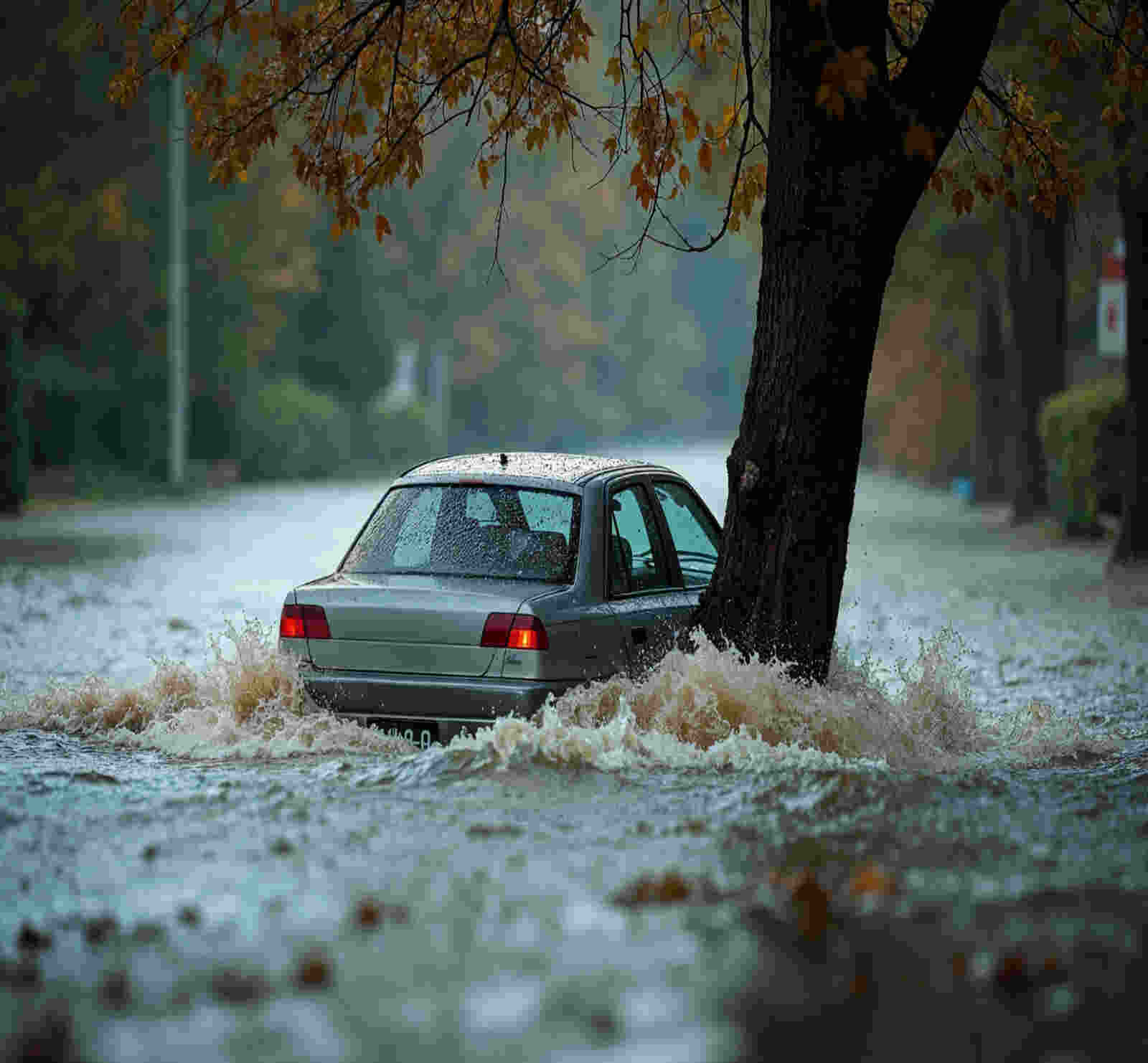
Yes, but be honest about its condition. A flooded car may not start, steer, or brake normally, so it needs a winch and non-running service. Flooded electric vehicles need extra care because of battery fire risk. Tell the shipper upfront so they send the right equipment and driver.
Can I leave belongings in the car when I ship it?
Most carriers allow little or nothing inside the car. Personal items are not covered by cargo insurance, and extra weight can raise costs. In an emergency, pack valuables, documents, and medicine in your go-bag instead. Remove toll tags and garage openers too, so nothing gets lost or charged.
Get an instant car shipping quote. Don’t wait for the evacuation order. Check your price with Haulin.ai now and lock in a pickup window while trucks are still available.
Key takeaways
- Book emergency auto transport at the “watch” stage, before mandatory orders close roads.
- Expect to pay 25–50% more than a standard quote during a disaster surge.
- Drive one car and ship the other if you have two.
- Choose open transport for speed; enclosed only if you can book early.
- Verify the carrier, take dated photos, and be honest about flood damage.
Conclusion
Knowing how to ship a car during an emergency evacuation or natural disaster comes down to one thing: timing. Move early, pick a realistic price, and keep your own safety first. Your car can follow you a day or two later. You should never wait for it.
Hurricane and wildfire seasons aren’t going away. A plan made today means one less decision when the alert hits your phone.
Ready to ship your car? Get a quote now with Haulin.ai, or call our team to get started today. Get your instant quote · Talk to a shipping expert

**About the Author — Shraddhanvita Tiwari**
Shraddhanvita Tiwari is an auto transport industry expert specializing in vehicle shipping, auto transport logistics, carrier networks, and the U.S. car shipping market. Her experience in the industry gives her a practical perspective on the factors that influence auto transport pricing, carrier selection, shipping timelines, and the overall vehicle shipping experience. At Haulin.ai, she contributes industry-focused insights designed to make car shipping easier to understand for consumers and businesses.