
Last Updated on 4 months ago by Shraddhanvita
Most people booking car shipping for the first time have one nagging question they don’t quite know how to ask: once my keys are handed over, what actually happens to my car? Is it tossed around on the highway? Does someone watch it the whole time? What if it rains?
This guide answers exactly what happens to your car during auto transport, told from the carrier’s side of the windshield. We’ll walk through how car carriers load vehicles, what the driver is doing at every stop, and give you an honest inside view of the car shipping process — the parts most companies never explain.
Knowing this upfront does two things: it sets realistic expectations, and it helps you spot a legitimate carrier from a sketchy one. If you’re ready to see real pricing for your route, you can get an instant car shipping quote in under a minute.
Quick Summary: What Happens to Your Car During Transport
- Your car is inspected and photographed at pickup to document its exact condition before loading.
- It’s loaded and secured using wheel straps or chains rated for highway speeds, not rope or bungee cords.
- Drivers position vehicles on the trailer by weight, size, and ground clearance, not randomly.
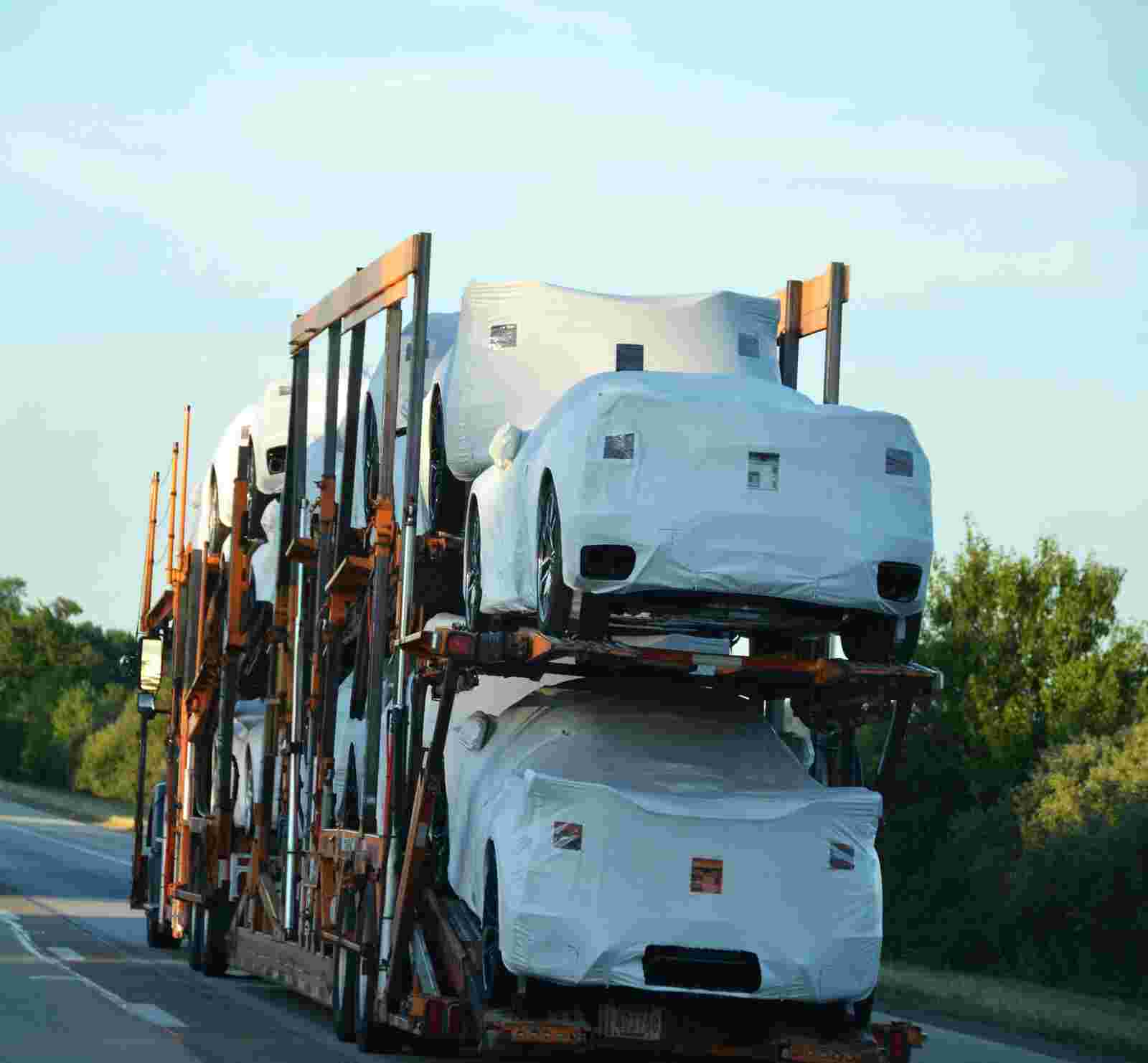
- Your car typically rides with 5–9 other vehicles on an open trailer, or 1–4 on enclosed transport.
- GPS and carrier check-ins let dispatch (and often you) track progress in real time.
- At delivery, a second inspection compares the car’s condition against the pickup report before you sign off.
If you want a deeper look at the trailer types themselves, read our full breakdown of open vs. enclosed car transport.
Get an instant car shipping quote with Haulin.ai in under 40 seconds — no calls required.
What Is Auto Transport, From the Carrier’s Side?
Auto transport is the process of moving a vehicle from one location to another using a professional carrier truck instead of driving it yourself. From the customer’s side, it looks simple: book, wait, receive your car. From the driver’s seat, it’s a logistics operation involving routing, weight distribution, securement, and timing across multiple states.
Carriers are independent trucking companies or owner-operators registered with the Federal Motor Carrier Safety Administration (FMCSA). They run routes that combine multiple customers’ vehicles onto a single trailer, which is why shared open transport costs less than booking a dedicated truck.
How Car Carriers Load Vehicles: The Inside View
This is the part most people never see, and it’s more deliberate than it looks from the curb.
Step 1: Pre-Pickup Condition Inspection
Before your car touches the trailer, the driver walks around it with a Bill of Lading (BOL) — essentially a condition report. They note existing scratches, dents, low tire pressure, fluid leaks, and mileage. Most drivers photograph each panel on their phone. This document becomes the baseline for delivery, so both you and the carrier should review it together and keep a copy.
Step 2: Trailer Position Planning
Drivers don’t load vehicles first-come, first-served. On a multi-car open trailer, they’re solving a weight-and-clearance puzzle:
- Heavier vehicles (trucks, SUVs) typically go on the bottom deck for stability.
- Lower ground-clearance cars and convertibles often ride higher, away from road debris.
- Vehicles dropping off earlier in the route get positioned for easier unloading.
- Total trailer weight has to stay within federal limits across all axles.
Step 3: Loading and Securement
The car is driven or winched onto the trailer ramp, then secured using wheel straps, chains, or both, anchored to the trailer frame and tightened to remove slack. This is what actually keeps a car stationary at highway speed — not the parking brake. A properly secured vehicle shouldn’t shift, bounce loosely, or rock side to side once strapped down.
Step 4: Final Walkaround
Before pulling out, most drivers do a final check of all straps, mirrors, and antennas, and confirm nothing is loose or hanging that could be damaged in transit.
Text us for a quick estimate — see how loading and routing affect your price.
What Happens Once Your Car Is On the Road
During transit, here’s what’s actually happening, not what most companies bother to tell you:
Routing isn’t a straight line. Drivers combine multiple customers along a single corridor, picking up and dropping off vehicles at logical points. Your car might sit on the trailer for a day or two before the truck even leaves your state, especially with open transport on standard timelines.
Drivers are bound by Hours of Service rules. Federal regulations limit how many consecutive hours a commercial driver can be behind the wheel, which is part of why delivery windows are estimates, not guarantees.
Tracking exists, but it varies by carrier. Many carriers use GPS-enabled dispatch software, and reputable platforms like Haulin.ai provide proactive status updates so you’re not left guessing. Ask your carrier directly what tracking they offer before booking.
Weather and road conditions are factored in. Drivers reroute around storms, construction, or low-clearance bridges when carrying taller vehicles. This is normal and protects your car, even if it occasionally adds a day to the timeline.
Open vs. Enclosed: What Actually Changes En Route
| Factor | Open Transport | Enclosed Transport |
|---|---|---|
| Vehicle exposure | Open to weather, dust, road debris | Fully enclosed, protected from elements |
| Vehicles per trailer | Typically 6–9 | Typically 1–4 |
| Cost | Lower (shared trailer space) | 30–50% higher |
| Common use case | Standard daily-driver vehicles | Luxury, classic, or collector cars |
| Industry usage | ~85–90% of all shipments | Remainder, mostly high-value vehicles |
For most standard vehicles, open transport is the industry default and is considered safe for daily drivers. If you’re shipping something higher value, our open vs. enclosed transport guide breaks down the full cost-benefit case.
Factors That Affect What Happens to Your Car in Transit
- Vehicle type and size — larger vehicles get bottom-deck placement and may affect trailer routing.
- Distance — longer hauls mean more pickups/drop-offs along the route, which can affect handling frequency.
- Season — winter routes may involve road salt exposure on open trailers; summer routes carry heat exposure.
- Operability — inoperable vehicles require winching equipment and extra loading time.
- Carrier type — owner-operators vs. larger fleets can have different load planning and communication standards.
If you’re curious how all of this rolls into your final price, our car shipping cost guide and the quote generation breakdown explain the full pricing logic.
Mistakes That Make the Carrier’s Job (and Yours) Harder
- Leaving personal items in the car. Most carrier insurance doesn’t cover personal belongings, and added weight isn’t accounted for in trailer load planning.
- Skipping the inspection walkaround. Without a documented BOL signed by both parties, disputing damage later becomes very difficult.
- Not securing loose parts. Aftermarket spoilers, loose trim, or low air in tires can complicate proper strapping.
- Assuming “ship date” means “pickup date.” Open carriers work pickup windows, not exact appointments, because routes shift based on other customers’ vehicles.
What Happens at Delivery
The reverse of pickup happens at drop-off: the driver unstraps your vehicle, walks it through a final inspection against the original BOL, and asks you to sign off confirming condition. This is the moment to actually compare the car against the report, not just glance and sign. Any new damage should be noted on the BOL itself before you sign, since that document is what insurance claims, if needed, are based on.
Ready to ship your car? Call now to speak with a shipping expert before you book.
Real Stories From Customers
“I expected my car to just disappear into a black box for four days. Instead, the driver sent a photo at pickup, and I actually understood why my SUV was on the bottom deck — heavier vehicle, made sense once it was explained.” — Auto transport customer, cross-country shipment
“The walkaround at delivery caught a scuff that wasn’t there before, and because it was on the paperwork from pickup, the claim process was straightforward instead of a fight.” — Returning customer, open transport
How Haulin.ai Is Different
Unlike traditional brokers, Haulin.ai uses AI to instantly match you with the right carrier at a transparent price, so you’re not waiting on callbacks or guessing what’s included. You get real-time pricing, proactive updates while your car is in transit, and a process built around the same inspection and securement standards covered above, without the runaround.
FAQs: What Happens to Your Car During Auto Transport
Does my car get driven during shipping, or only trailered?
It’s loaded onto a trailer and driven only the short distance on and off the ramp at pickup and delivery. It is not driven on public roads under its own power during the haul itself.
Will my car get dirty or scratched on open transport?
Open transport exposes vehicles to road dust, weather, and debris, which is normal and expected. It rarely causes damage beyond surface dirt, which is why a pre-pickup wash and inspection matter.
How do I know my car won’t shift during transport?
Carriers secure vehicles with wheel straps or chains rated for highway driving, tightened to remove slack. A proper securement check is part of the pre-departure walkaround every reputable driver performs.
Can I track my car while it’s being shipped?
Many carriers offer GPS-based or dispatch-based tracking. Haulin.ai provides proactive status updates so you know where your vehicle is without having to call and ask.
What if my car arrives damaged?
Compare the vehicle against the original Bill of Lading at delivery before signing. Any new damage should be noted on that document immediately, since it’s the basis for any insurance claim.
Do carriers stop along the way?
Yes. Most carriers combine multiple customers along a single route, picking up and dropping off vehicles as they go, which is part of how shared open transport keeps costs lower.
Is my car insured during transport?
Licensed carriers are required to carry cargo insurance. Confirm coverage limits before booking, and ask whether your own auto policy offers supplemental coverage for transit.
How long does my car actually sit before pickup?
With standard scheduling, vehicles can sit for a day or two before the carrier’s route reaches your location. If timing is critical, ask about expedited options.
Key Takeaways
Auto transport is a far more structured process than it appears from the outside: vehicles are inspected, weighed, positioned, and secured with the same deliberateness as any other commercial freight. According to industry estimates, the vast majority of shipments move without incident specifically because of this structure, not in spite of it. Knowing what to expect at pickup and delivery is the best protection you have as a customer.
Ready to see what shipping your car actually costs? Get an instant quote or call our team to get started today.

**About the Author — Shraddhanvita Tiwari**
Shraddhanvita Tiwari is an auto transport industry expert specializing in vehicle shipping, auto transport logistics, carrier networks, and the U.S. car shipping market. Her experience in the industry gives her a practical perspective on the factors that influence auto transport pricing, carrier selection, shipping timelines, and the overall vehicle shipping experience. At Haulin.ai, she contributes industry-focused insights designed to make car shipping easier to understand for consumers and businesses.