

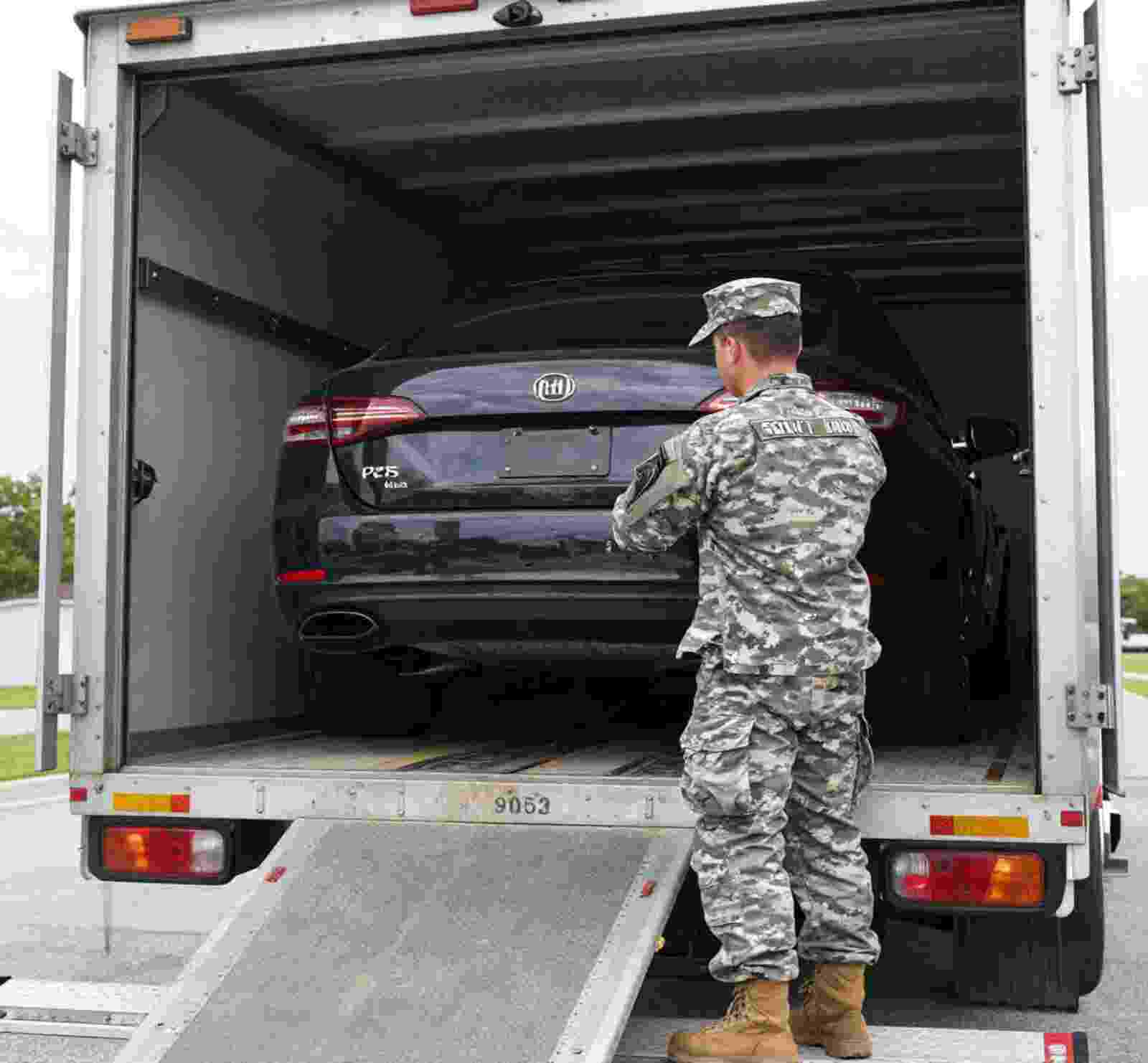
If you are in the military, you and your family can get a PCS (Permanent Change of Station) or CONUS (Continental United States) order at any time. You might be excited about the idea of moving to a new place, but you might also be scared. While the prospect of moving somewhere new can be very exciting, you might also feel a sense of trepidation about the move.
The clock is ticking, and you have to deal with housing, family logistics, and the reporting date. To add to the experience, you’ve got to figure out how to get your vehicle across multiple states. Driving means adding hundreds of miles and risking wear and tear. Military PCS car shipping could be the answer, but there are things you need to know about the process.
On a positive note, the US Armed Forces sometimes cover the cost of shipping one family car, especially if it’s overseas. There are rules and policies to follow, though, and it can be hard.
In this guide, we’ll talk about how the government can help with your move, what the problems and limits are, when it’s better to book private car shipping for your PCS, how much it costs, and how it compares to other options.
Government PCS vehicle shipping is only available in specific situations, and eligibility matters more than most people realize. It’s generally limited to Department of Defense or Department of State members and DOD employees who are moving to or from an overseas duty station. Even then, shipment is only approved if the host country allows vehicle import and your orders do not restrict shipping or storage.
If your orders authorize it, your vehicle is moved through the Department of Defense’s contracted POV shipping program. Everything runs through designated vehicle processing centers rather than door-to-door service. That means you’re responsible for delivering the car to a VPC and collecting it at another VPC on the receiving end.
Before a vehicle is accepted, it must pass several checks. One of the most common problems is recalls. Any open recall, even one you were not aware of, will stop the shipment. Service members must prove there are no unresolved recalls at turn-in, usually by printing a report from the NHTSA recall database. If a recall cannot be fixed due to parts shortages or location issues, the VPC has to be contacted before your appointment, or the vehicle will not be accepted.
Documentation is another frequent bottleneck. You’ll need a complete set of orders, proof of ownership or registration, and, if applicable, authorization from a lienholder or leasing company. Missing paperwork is one of the main reasons vehicles are turned away or appointments are delayed.
The vehicle itself also has to meet basic condition standards. It must be operable, clean inside and out, free of leaks, with working brakes and a quarter tank of fuel or less. Windshield damage, non-factory alarms, missing keys, or even excess fuel can cause a failed turn-in. If someone else is delivering the vehicle on your behalf, a power of attorney or notarized authorization is required.
After the vehicle is accepted, visibility becomes limited. You can check status updates, but they tend to be broad and infrequent rather than step-by-step. Shipping and storage follow fixed schedules, and those schedules don’t always align neatly with household goods delivery, flights, and reporting dates.
When everything goes smoothly, government PCS vehicle shipping works. When it doesn’t, delays usually come down to small things that snowball, a recall that wasn’t caught early, paperwork that needed one more signature, or a prep issue that sent the car back out of line. It’s rarely the transport itself; more often, the process around it.
One of the biggest limitations of DOD vehicle transport is that it runs on a system schedule, not a personal one. Once your car enters the pipeline, individual timelines matter less than overall volume, sailing availability, and port capacity. During peak PCS season, that system can slow down quickly.
Vehicles are often grouped by destination and shipped in batches. If your car misses a cutoff, it may sit until the next available movement rather than being rerouted. That can add days or even weeks, especially on high-demand overseas routes.
Another thing people don’t always expect is how locked-in the process becomes once it starts. If your travel plans change, housing gets delayed, or your reporting date shifts, there’s usually not much room to adjust. By then, the vehicle is often already in line or assigned, which makes even small changes hard to work through.
Delivery timing can also be unpredictable. Cars may arrive before you’re in a position to receive them, or after you’ve already settled in. Storage is sometimes available, but it’s not always immediate, and access depends on local capacity rather than personal preference.
These delays aren’t the result of poor handling or careless transport. They’re a side effect of a centralized system built to move large volumes efficiently, not to adapt to individual PCS schedules. For service members with tight reporting windows or layered family logistics, that lack of control is often the deciding factor when comparing government vs. private car shipping for a PCS.
When the PCS timeline isn’t flexible anymore, private car shipping often comes into play. If your reporting date is set, your housing is still in motion, or your family’s travel plans don’t fit together perfectly, private transportation gives you more control over when your car moves.
This option is common for CONUS relocations, especially cross-country moves where driving would add days of travel and unnecessary mileage. Many service members also use private auto transport for their military move when shipping a second vehicle, since government programs typically cover only one POV, if they apply at all.
Another reason people choose to ship their car for a military relocation privately is scheduling. Private carriers usually offer narrower windows and door-to-door service, which makes it easier to coordinate around leave, school schedules, or temporary housing. That flexibility can matter more than the cost difference, particularly during peak PCS season.
Private shipping can also be a better fit when you want more transparent communication. While timing can still shift, updates tend to be more frequent and easier to track, which makes planning easier. For newer vehicles or specialty cars, the option to choose enclosed transport adds another layer of control.
For many families, the decision comes down to trade-offs. Government shipping works within a centralized system. Private transport is more personal, more adaptable, and often easier to fit around real-world PCS logistics. That’s why, when comparing government vs. private car shipping for a PCS, private shipping starts to make sense as soon as timing and coordination become priorities.
Cost and timing are usually where the differences between government and private shipping become most apparent. On paper, government transport appears to be the cheaper option, and in some cases, it is. When vehicle shipment is authorized, there is no direct out-of-pocket cost. The trade-off is time and predictability.
With DOD shipping, the timing depends on when the system is available, not on personal schedules. Cars only move when there is room, not when you need them to. If your schedule is flexible, that can work., but if the car shows up early or late, you may have to make plans for temporary transportation or adjust your plans.
Private shipping changes that. You pay for the service, but you get to choose when the carrier picks up and drops off your car. Most private carriers work within set windows instead of open-ended ranges. This makes it easier to plan where you’re living, when you’re starting work, and when to travel with your family.
In 2026, the cost of shipping a private military PCS car will depend on the distance, the demand for the route, and the time of year. Shorter moves within the continental United States (CONUS) usually cost less, while cross-country shipping costs more, especially during the busiest PCS months (mid-May through August). Enclosed transport costs more, but people who are shipping newer or more valuable cars like it.
In reality, comparison comes down to more than just dollars. Government shipping saves money but often costs time and flexibility. Private shipping costs more upfront but reduces uncertainty. For many service members, that difference becomes clear once they weigh the costs of delays, rentals, or last-minute changes during a PCS.
Once your PCS orders drop, vehicle shipping is one of those things that’s easy to push down the list. It usually comes back as a problem later. Even if dates are still shifting, it helps to think about your car early.
The first step is simply knowing where you stand. Some moves allow government vehicle shipping, others don’t. That difference affects everything else, so it’s worth confirming sooner rather than guessing and adjusting later.
If government transport is part of your move, timing expectations matter. Transportation offices work within set systems, and appointment availability can change quickly, especially during the busiest PCS months. Getting a sense of those timelines early makes it easier to plan travel and housing without surprises.
If private shipping is on the table, early planning still pays off. Carriers tend to have more availability and tighter windows when moves are planned. Even getting a rough quote early gives you something solid to compare if government options start to feel too slow or restrictive.
It also helps to consider the practical aspects of the vehicle itself. Basic maintenance, cleaning the car, and identifying potential issues ahead of time can prevent last-minute delays. Those small details often matter more than people expect.
The moves that go most smoothly usually treat vehicle shipping as its own decision, not something to solve at the last minute. Whether you’re using government transportation or planning to ship your car privately for a military relocation, lining it up with your orders and reporting date makes the rest of the PCS easier to manage.
At the end of the day. military PCS car shipping isn’t about finding a perfect option. It’s about choosing the one that causes the fewest problems for your move.
Government transport can work when it’s authorized, and your timeline has room to breathe. If everything lines up, it does what it’s supposed to do. Where it falls short is flexibility. Once the process starts, you’re mostly along for the ride.
Private shipping comes into play when timing matters more than cost. Fixed reporting dates, housing delays, school schedules, or family travel plans all make tighter control worth considering. That’s usually when service members decide to ship their car for a military relocation on their own terms.
Before you decide, it helps to step back and look at the move as a whole. How much room do you really have if the vehicle arrives early or late? What would a delay actually cost you in rentals, time, or stress? Those answers make the choice clearer than a price comparison ever will.
Planning early and treating the vehicle as its own part of the PCS, not an afterthought, is what keeps things from unraveling later. Whether you go with government transport or private auto transport for your military move, the right decision is the one that keeps the rest of your relocation on track.
Get your fast private PCS shipping quote today!