
Last Updated on 8 months ago by Shraddhanvita
Whether you’ve just received a sudden job offer across the country or you’re dealing with a family emergency, the logistics of moving your life can feel overwhelming.
That is why, in this fast-paced world, full of responsibilities and unexpected changes, last-minute car shipping can turn into a lifesaver option.
In 2026, auto transport is faster and more digital than ever before. What is more, car shipping now offers a wide range of options so you can move your car seamlessly and meet even the most urgent of deadlines.
However, while technology has streamlined the whole process, the actual drive still relies on highway speed limits and driver availability. So, in order to make the right choice for your timeline, at Haulin, we’ve developed this comprehensive guide.
What Qualifies As Expedited Transport
Expedited transport, in the car shipping world, is a type of service — usually regarded as a higher tier of logistics — designed to prioritize speed and precision over cost.
This means that while standard shipping operates on a flexible window (where the carrier picks up the car whenever their truck is full), expedited transport prioritizes your vehicle above all others.
To qualify as true expedited transport in 2026, the service generally includes these three key features:
Guaranteed 24 – 48 Hour Pickup
The most significant difference between standard and expedited auto transport is the accelerated pickup window. While traditional windows usually provide a window of 1 to 5 days, expedited transport guarantees a truck will arrive to load your vehicle within 24 to 48 hours of your booking.
Dedicated Trucks
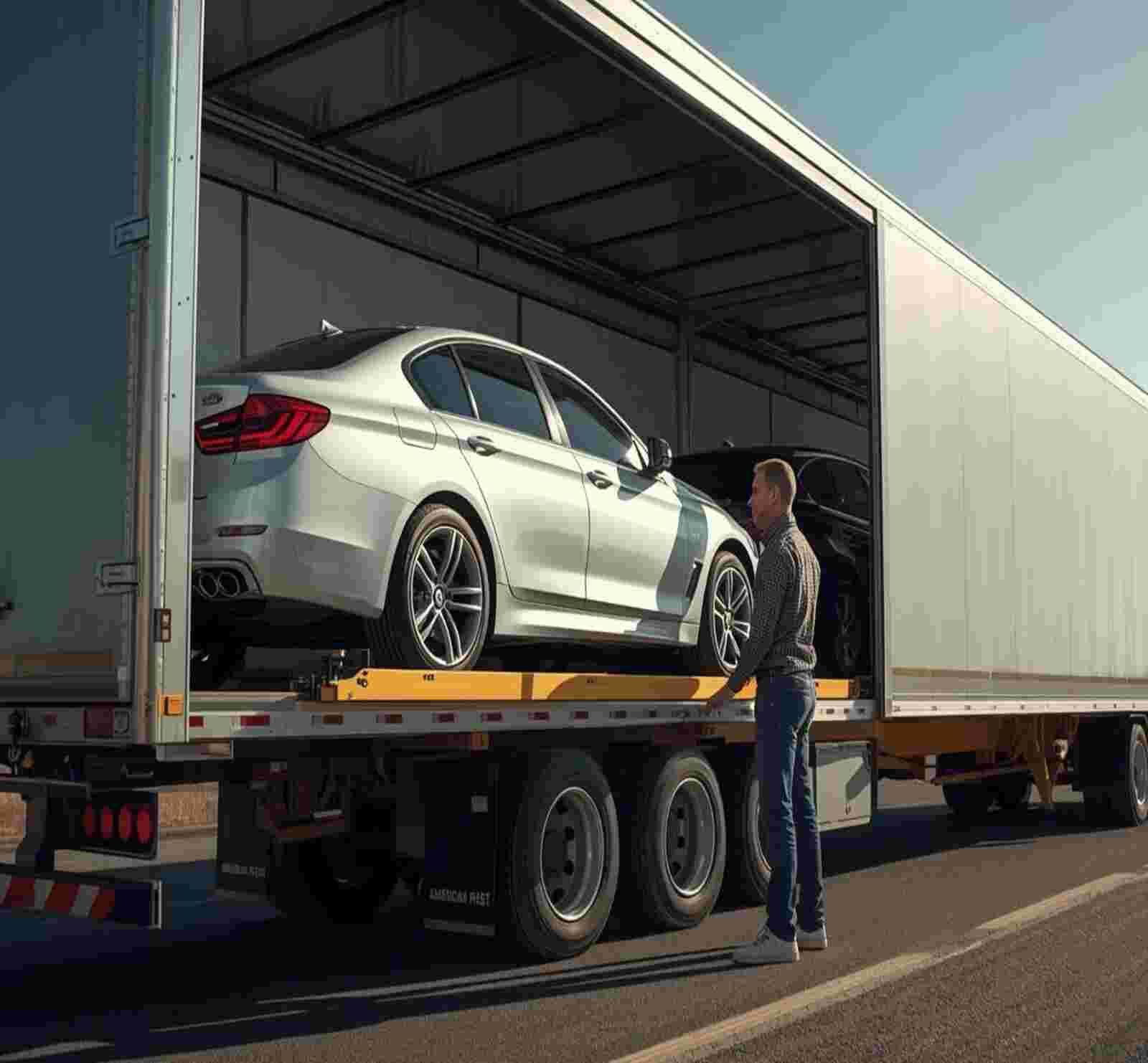
Standard cars are usually moved on massive, double-decker trailers hauling 8 to 10 vehicles. These trucks move slowly because they have to stop constantly to load and unload other customers’ cars.
Expedited orders are often assigned to dedicated carriers with only two or three vehicles. With fewer cars to manage, these drivers make fewer stops and can stick to a tighter schedule.
Direct Routing
In standard shipping, a driver might pick up cars in a city and then detour to other cities to fill the truck before finally heading to the destination. Expedited transport typically qualifies as a direct route. The driver picks up your car and heads straight toward the drop-off point with minimal or zero deviations.
Same-Day vs Next-Day Pickup Expectations
In last-minute car shipping, not everything is the same. And, even though same-day auto transport and next-day delivery can seem like very similar time frames, when time is of the essence, an extra 12-16 hours can really make a difference.
Same-day auto transport requires alignment. A driver must be empty, in your immediate area (usually within 20 miles), and already heading in your direction at the time of the request. Furthermore, you almost always need to book before 10:00 AM local time to allow for dispatching.
Before, this service used to be close to impossible to get, as manual schedules and phone-based dispatching systems created lag times that simply couldn’t accommodate urgent requests.
Today, AI and real-time GPS tracking have completely streamlined the process, allowing dispatchers to instantly find a driver with open trailer space who is already in your area.
Next-Day Pickup, in comparison with same-day auto transport, is the gold standard of expedited auto transport and far more reliable because it gives dispatchers 24 hours to reroute a driver to you.
A driver usually diverts from their current route to put you first on their schedule for the following morning, and it is usually cheaper than same-day service.
Cost of urgent shipping
In the logistics world, speed is usually one of the most coveted but expensive variables, as it means you are paying the carrier to choose your vehicle over all the others, even though that might require the driver to change the schedule or go out of their way.
In 2026, you should expect to pay a 30% to 50% premium over standard rates for guaranteed or expedited service. The reason for the price increase usually comes down to these reasons:
Empty Miles: A dedicated driver might have to drive miles without cargo just to reach your pickup location. You are covering the fuel and time for that empty leg.
Opportunity Cost: By dedicating their truck to your single vehicle (or small load), the driver loses revenue they would have made hauling a full 9-car load.
Team Driving: For the fastest possible cross-country moves, some carriers use two drivers who switch shifts to keep the truck moving 22 hours a day. This double-labor cost is passed on to you.
Here’s a chart comparing prices between expedited and standard shipping according to distance:
| Route Type | Distance | Standard Cost (Open) | Expedited Cost (Open) |
| Short Haul | 300 miles (e.g., Dallas to Houston) | $450 – $600 | $800 – $1,100 |
| Medium Haul | 1,000 miles (e.g., Chicago to Denver) | $1,100 – $1,300 | $1,600 – $1,900 |
| Cross-Country | 2,500 miles (e.g., LA to NYC) | $1,500 – $1,700 | $2,300 – $3,000 |
How AI Dispatch Improves Speed
As we explained before, logistics is a field that has benefited incredibly from the introduction of AI, making this the main enabler for expedited autotransport. Before, humans had to rely on manual phone calls in order to get a car transported from point A to point B. Now, sophisticated algorithms now run the logistics.
Here is how AI technology translates to speed for your specific shipment:
Predictive Pre-Matching
In the old days, a broker posted your car to a board and waited for a trucker to call. Now, thanks to AI, as you are typing your address into the quote form, the system is already scanning thousands of drivers who meet your specific standards of shipping.
Dynamic Route Optimization
Before, drivers stuck to rigid, pre-planned routes. If there was traffic or a cancellation, they lost hours. With AI, modern dispatchers are constantly re-calculating the most efficient route for the driver to pick up your car. If a cancellation opens a spot on a truck 50 miles away, AI instantly alerts the driver that picking up your car is now their most profitable move.
Eliminating “Deadhead” Miles
“Deadhead” is industry slang for driving an empty truck. AI algorithms solve this by offering a driver a higher rate to pick up your car because it knows that your destination puts them perfectly in position for their next high-paying load. This efficiency incentivizes drivers to pick you up immediately.
When Expedited Shipping Is Worth It
If you’re wondering when it’s convenient to pull the trigger on expedited shipping, we need to tell you that it all comes down to your timeframe, deadline, and priorities.
Paying an extra fee for expedited shipping can feel costly upfront, but some scenarios demand it, and it can even save you money in the long run.
For example, let’s say you are moving cross-country. Standard shipping takes 12 days, while the urgent vehicle transport service takes 6 days. If you are without your car for those extra 6 days, you will likely need a rental. In 2026, a standard rental car averages $80 to $120 per day — after taxes and insurance.
So, when you do the math, expedited auto can be a better use of your money and even end up costing less overall in the whole process.
Don’t Let Logistics Slow You Down
At Haulin, we’ve built an IA-powered system exactly for people who value their time and want to make car shipping seamless and stress-free.
Instead of calling dozens of brokers and waiting for callbacks, our algorithm instantly scans thousands of active carrier routes to find the driver who is closest to you and ready to load.
Ready to leave the guesswork behind and get your car picked up today?
Book urgent vehicle transport now.

**About the Author — Shraddhanvita Tiwari**
Shraddhanvita Tiwari is an auto transport industry expert specializing in vehicle shipping, auto transport logistics, carrier networks, and the U.S. car shipping market. Her experience in the industry gives her a practical perspective on the factors that influence auto transport pricing, carrier selection, shipping timelines, and the overall vehicle shipping experience. At Haulin.ai, she contributes industry-focused insights designed to make car shipping easier to understand for consumers and businesses.