

Last Updated on 1 week ago by Shraddhanvita
At Haulin.ai, we started noticing a pattern in our quote requests that didn’t fit the usual mold. A regional HVAC company needed six service vans moved from Ohio to a new branch in Texas — all at once. A used car dealer wanted a standing arrangement to move 8–10 vehicles a month between two lots. A three-city courier startup needed its entire delivery fleet relocated in a two-week window before a lease expired. None of these fit neatly into a single-car quote form, and none of these owners wanted to call five different brokers to negotiate five different rates for five different trucks.
That gap is exactly what this fleet vehicle shipping for small business cost guide is built to close. Below, we break down what shipping multiple vehicles actually costs in 2026, how business fleet transport pricing differs from a one-off personal move, and how to avoid the mistakes that quietly inflate a multi-vehicle bill.
Moving more than one vehicle? Get a consolidated quote for your whole fleet.
Get an Instant Fleet Quote →Quick Summary
- Typical cost per vehicle for small-business fleet shipping runs $0.45–$2.50 per mile depending on distance, mirroring standard car shipping cost benchmarks — but multi-vehicle bookings often unlock per-unit savings.
- Fleets of 3+ vehicles moving on the same route are frequently priced with a 5–15% per-vehicle discount, since consolidating pickups reduces a carrier’s dead-head miles.
- Open transport is standard for work vans, sedans, and pickups; enclosed transport is reserved for demo units, luxury inventory, or low-clearance vehicles within the fleet.
- Roughly 91.5% of U.S. motor carriers operate 10 trucks or fewer, according to FMCSA registration data — meaning small fleets are the norm, not the exception, in the very carrier network that moves your vehicles.
- A single point of contact and one consolidated invoice — instead of five separate broker relationships — is usually worth more to a growing business than chasing the single cheapest per-vehicle rate.
- Business vehicle purchases may qualify for Section 179 tax deductions, which is worth factoring into total fleet cost alongside shipping.
Key Takeaway: Fleet vehicle shipping isn’t just “car shipping times five.” Route consolidation, mixed vehicle types, documentation for multiple titles, and volume pricing all behave differently than a single personal relocation — and small businesses that plan for that get meaningfully better rates.
What Is Fleet Vehicle Shipping for a Small Business?
Fleet vehicle shipping is the transport of two or more company-owned vehicles — service vans, dealership inventory, rental cars, delivery vehicles, or company cars — between locations, usually coordinated as a single logistics event rather than separate individual orders. For a small business, this typically means anywhere from 2 to 25 vehicles, moved either in one batch or on a recurring schedule as the company relocates, expands, restocks inventory, or reassigns vehicles between branches.
Unlike a single car shipment booked by a private individual, small business fleet transport usually involves:
- Multiple vehicle types (a mix of sedans, SUVs, vans, or light trucks)
- Multiple pickup or drop-off addresses across one order
- A need for consolidated invoicing and a single point of contact
- Recurring or seasonal shipping needs, not a one-time move
How Fleet Vehicle Shipping Works
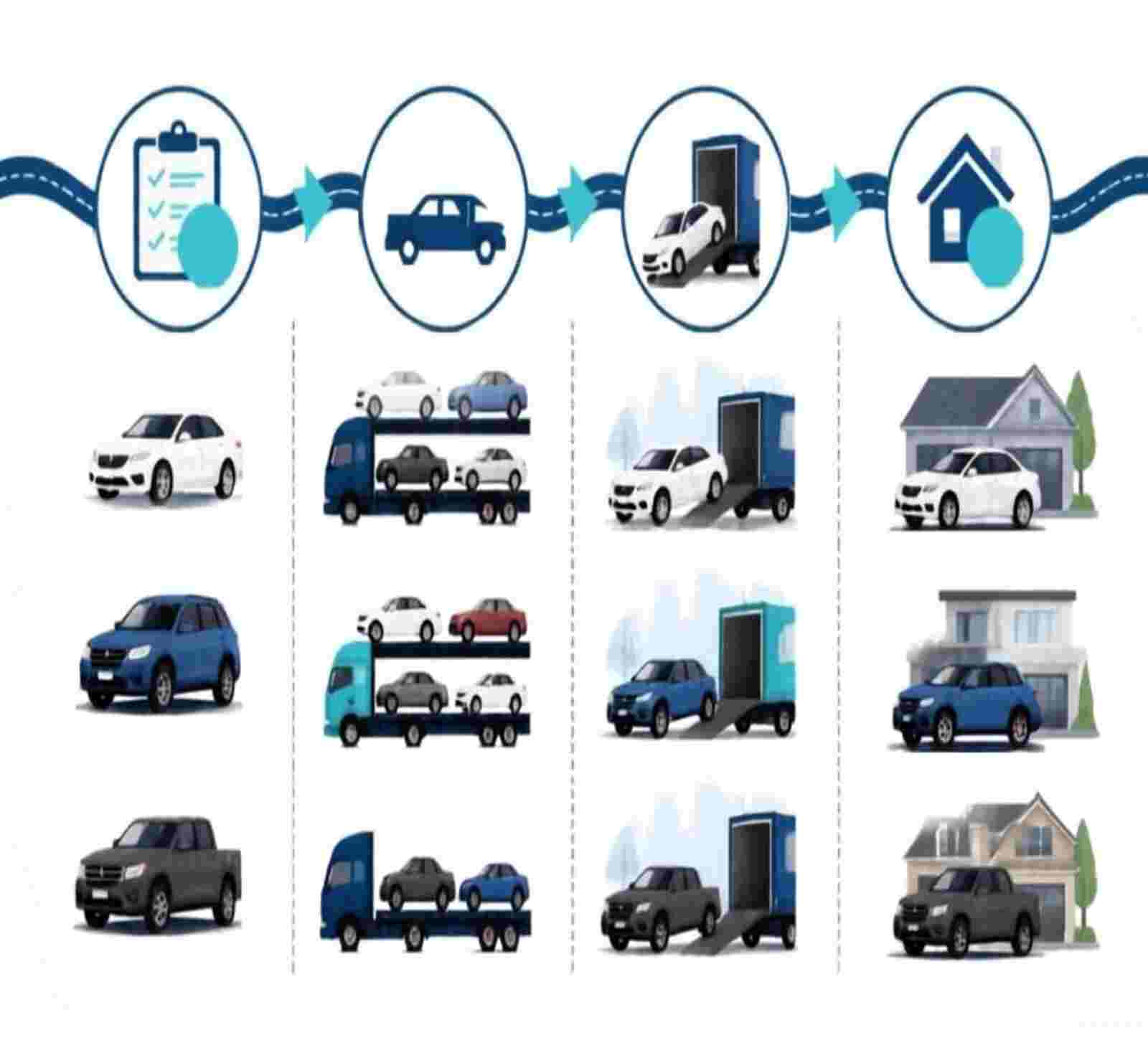
Moving a business fleet follows the same general framework as standard auto transport, scaled up for multiple units.
- Submit fleet details. Vehicle count, types, origin/destination points, and preferred timing.
- Get a consolidated quote. Pricing reflects route overlap and volume, not five separate quotes stitched together.
- Carrier assignment. Vehicles going the same direction are matched to carriers with available trailer capacity, ideally minimizing the number of separate trucks needed.
- Inspection and documentation per vehicle. Each unit still gets its own Bill of Lading and condition report at pickup — this doesn’t get skipped just because it’s a batch order.
- Coordinated pickup and delivery. Multi-stop routes are sequenced to keep transit predictable across the whole fleet, not just the first or last vehicle.
- Tracking and delivery confirmation. Status updates for the batch, not just individual vehicles, so your operations team isn’t checking five different trackers.
Fleet Vehicle Shipping Cost Guide: What Small Businesses Actually Pay
Fleet pricing starts from the same per-mile mechanics as individual car shipping, then applies volume logic on top. Here’s a realistic 2026 benchmark for shipping multiple vehicles on open transport, assuming a standard mix of sedans, crossovers, and light-duty vans:
| Fleet Size | Per-Vehicle Rate Behavior | Typical Discount vs. Single-Vehicle Rate |
|---|---|---|
| 1 vehicle | Standard published rate | Baseline |
| 2–3 vehicles, same route | Modest consolidation savings | 3–8% per vehicle |
| 4–8 vehicles, same route | Meaningful route efficiency for the carrier | 8–15% per vehicle |
| 9+ vehicles, or recurring monthly volume | Custom fleet agreement pricing | Negotiated, often the best rate available |
For distance-based math, small business fleet transport still follows the same per-mile curve as any car shipping cost guide: shorter routes cost more per mile, longer routes cost less per mile. A 1,000-mile fleet move might run $0.95–$1.30 per mile per vehicle on open transport before any volume adjustment; a 2,500-mile relocation typically drops to $0.45–$0.68 per mile per vehicle.
Have a specific route and vehicle count in mind?
Text Us for a Quick Fleet Estimate →(833)-HAULIN-1
Why Volume Pricing Exists
Carriers price around trailer efficiency. A single vehicle pickup means a truck may run partially empty for part of its route. When 3+ of your fleet vehicles are heading the same direction, a carrier can fill more of its trailer on one pass — which is why consolidated fleet bookings tend to land better per-vehicle pricing than the same vehicles quoted one at a time through separate orders.
What Affects the Cost of Commercial Auto Transport for a Small Fleet
Several variables move the needle beyond simple distance:
- Vehicle mix. A fleet of sedans prices differently than one with full-size cargo vans or pickups, which take up more trailer space.
- Route density. Fleets moving along high-traffic corridors (see popular car shipping routes) get better carrier availability than remote or rural routes.
- Pickup flexibility. A 5–7 day flexible window across the whole fleet is cheaper than requiring same-day pickup for every vehicle.
- Operable vs. inoperable units. Dealership trade-ins or auction purchases that aren’t running cost more per vehicle due to winch-loading requirements.
- Open vs. enclosed selection. Most of a work fleet ships open; only specific high-value or low-clearance units typically need enclosed transport.
- Seasonality. Fleet moves booked during snowbird season (January–February) or peak summer relocation months cost more than October–November or March–April.
- Number of distinct pickup/drop-off addresses. Consolidating pickups at one lot or yard is cheaper than a carrier making stops at five separate addresses.
Open vs. Enclosed vs. Multi-Car Carrier: Choosing Within a Fleet
Most small business fleets don’t need to pick one transport type for the entire batch — the right approach is usually mixed:
| Transport Option | Best For | Cost Impact | Notes |
|---|---|---|---|
| Open Transport | Service vans, standard sedans, work trucks, most dealership inventory | Baseline rate; the default for fleet volume savings | Same protection level as normal highway driving; used for 90%+ of everyday vehicles |
| Enclosed Transport | Demo/luxury units, low-clearance vehicles, high-value inventory | +40–60% per vehicle vs. open | Reserve for the specific units that need it, not the whole fleet — see our open vs. enclosed comparison |
| Expedited/Dedicated Run | Franchise launches or time-critical relocations with a hard delivery date | Premium pricing, but a single predictable ETA | Best when the whole fleet must arrive together — see express auto transport |
Broker vs. Carrier vs. AI-Matched Network for Business Fleets
Small businesses coordinating multiple vehicles typically choose between three models:
| Traditional Broker | Direct Single Carrier | AI-Matched Network (Haulin.ai) | |
|---|---|---|---|
| Pricing | Negotiated manually, can shift after booking | Fixed to that carrier’s own lanes | Real-time market pricing, locked at booking |
| Fleet capacity | Coordinates multiple carriers by phone/email | Limited to one carrier’s trailer space | Matches your full fleet across vetted, verified carriers automatically |
| Point of contact | Varies; can change between vehicles | Single contact, but limited route flexibility | One dashboard and one contact for the entire batch |
| Volume pricing | Sometimes, if you negotiate hard | Rare | Built into the quote once you enter 2+ vehicles |
Unlike traditional brokers juggling separate phone calls per vehicle, Haulin.ai uses AI to match your entire fleet with vetted, DOT- and MC-verified carriers at transparent pricing — without the back-and-forth calls a multi-vehicle order usually requires. Every carrier in the network is verified the same way we’d recommend you verify any hauler yourself, using the FMCSA’s public carrier search to confirm an active MC number and current cargo insurance.
Coordinating 5, 10, or 25 vehicles? Talk it through with a fleet shipping expert.
Call Now: (833)-HAULIN-1 →Common Small-Business Scenarios for Fleet and Commercial Auto Transport
- Dealerships and auction buyers repositioning inventory between lots or picking up auction wins in bulk — see our dedicated dealership car shipping resources.
- Service businesses (HVAC, plumbing, landscaping, pest control) relocating or expanding a branch and moving their van fleet in one window.
- Franchise and multi-location businesses standing up a new territory and needing a full starter fleet delivered together.
- HR and corporate relocation teams moving company-assigned vehicles for relocating employees — related reading: corporate relocation car shipping for HR teams.
- Rental and car-sharing operators rebalancing inventory between regional hubs, often on a recurring schedule.
Documentation, Compliance & Tax Considerations
Business fleet shipments carry a bit more paperwork than a single personal move, mostly because you’re managing multiple titles, drivers, and sometimes multiple business locations at once.
- Verify carrier authority for every shipment. Confirm an active DOT number and MC number before booking, especially with unfamiliar carriers moving high-value inventory.
- Get a Bill of Lading per vehicle. Even in a batch order, each unit needs its own condition report at pickup and delivery — this protects your business if a damage claim comes up later.
- Coordinate your commercial auto insurance. Your business policy, not the driver’s personal policy, typically needs to reflect vehicles in transit; confirm coverage gaps with your insurer before a multi-vehicle move.
- Ask your accountant about Section 179. Business vehicles placed in service during the tax year may qualify for accelerated depreciation under IRS Section 179, which can meaningfully offset the cost of growing a fleet — shipping costs are a separate line item, but worth planning alongside a purchase.
Case Snapshot: A Small-Business Fleet Shipment in Practice
Here’s a composite example based on the type of request we see regularly: a three-location auto glass repair company opening a fourth location needed five service vans moved roughly 900 miles, all arriving within the same five-day window so techs could start scheduling jobs immediately. Booking the five vans as one consolidated order — instead of five separate quotes — brought the route into carrier-efficient territory, cut several days off the coordination process compared to calling multiple brokers, and gave the ops manager one tracking view instead of five. This is the kind of scenario fleet volume pricing is built around: same-direction vehicles, a defined window, and one point of accountability.
Pros & Cons of Consolidating Fleet Shipments With One Provider
Pros
- Volume pricing on 3+ vehicles moving the same direction
- One invoice and one point of contact instead of several
- Easier to standardize documentation and insurance verification across the batch
- Predictable delivery windows for time-sensitive launches
Cons
- Less flexibility to chase the single cheapest rate per individual vehicle
- Requires more upfront coordination of pickup addresses and vehicle details
- Mixed fleets (some units needing enclosed transport) require slightly more planning than a uniform batch
Mistakes to Avoid When Shipping a Business Fleet
- Booking each vehicle separately. This is the single biggest cost leak — it forfeits volume pricing and creates scheduling chaos across multiple carriers.
- Skipping carrier verification on unfamiliar haulers. Always confirm active operating authority and insurance before a high-value or high-volume shipment.
- Ignoring pickup window flexibility. Requiring same-day pickup for every vehicle in a large fleet often adds a real premium.
- Under-documenting condition on every unit. In a batch move, it’s tempting to rush inspections — don’t. Multiple vehicles mean multiple opportunities for a claim.
- Waiting until the last minute for larger batches. Bigger fleets need more lead time for a carrier to plan trailer space efficiently.
How to Get the Best Fleet Shipping Rate
- Batch vehicles going the same direction into one quote request rather than several smaller ones.
- Use a flexible 5–7 day pickup window across the fleet when your timeline allows it.
- Reserve enclosed transport for the specific units that need it — luxury, low-clearance, or high-value inventory only.
- Book outside peak season (October–November or March–April) when possible for non-urgent relocations.
- Set up a recurring account if you ship vehicles monthly, such as a dealership or rental operator, to lock in consistent volume pricing.
Get a Fleet Volume Quote → Request pricing for your business
Frequently Asked Questions
How much does it cost to ship multiple vehicles for a business fleet? Fleet shipping generally follows the same per-mile pricing as individual car shipping — roughly $0.45–$2.50 per mile depending on distance — but 3+ vehicles moving the same route often see a 5–15% per-vehicle discount compared to booking each one separately.
Do fleet shipments get a volume discount? Often, yes. Carriers price around trailer efficiency, so consolidating same-direction vehicles into one order typically earns better per-unit pricing than separate individual bookings, especially at 4 or more vehicles.
Can a small business set up a recurring or standing shipping arrangement? Yes. Dealerships, rental operators, and businesses with regular relocation needs can typically arrange recurring volume pricing rather than requoting from scratch every time.
What’s the difference between shipping a personal car and a business fleet? Fleet shipments usually involve multiple vehicle types, multiple pickup points, consolidated invoicing, and recurring scheduling — versus a single vehicle, single pickup, and one-time transaction for a personal move.
Do I need special insurance to ship company vehicles? Your business commercial auto policy should be checked for in-transit coverage gaps before a multi-vehicle shipment. Carriers are also required by the FMCSA to carry their own cargo insurance covering carrier negligence.
How far in advance should I book fleet vehicle shipping? For 2–3 vehicles, 7–14 days is usually sufficient. For 6 or more vehicles, especially with a hard delivery deadline like a location launch, plan 3–4 weeks ahead so a carrier can allocate trailer space efficiently.
Can I mix open and enclosed transport within one fleet order? Yes. It’s common to ship the majority of a fleet on open transport while reserving enclosed transport for specific high-value or low-clearance units within the same batch.
Is fleet vehicle shipping tax deductible? Shipping costs for business vehicles are generally a deductible business expense, and the vehicles themselves may separately qualify for Section 179 depreciation. Confirm specifics with your accountant, as rules depend on business use percentage and vehicle type.
Ready to Ship Your Fleet?
Coordinating five, ten, or twenty-five vehicles shouldn’t mean five, ten, or twenty-five separate phone calls. Get a consolidated, AI-matched fleet quote and one point of contact for the whole shipment.
Ready to Ship Your Fleet?
Get one consolidated, AI-matched quote and a single point of contact — no separate calls per vehicle, no juggling multiple brokers.
Get a Fleet Volume Quote →Or call (833)-HAULIN-1
Related Reading from Haulin.ai
- Car Shipping Cost Guide 2026
- Car Shipping Cost Breakdown: What You’re Really Paying For
- Dealership Car Shipping
- Corporate Relocation Car Shipping for HR Teams
- Open vs. Enclosed Car Transport

**About the Author — Shraddhanvita Tiwari**
Shraddhanvita Tiwari is an auto transport industry expert specializing in vehicle shipping, auto transport logistics, carrier networks, and the U.S. car shipping market. Her experience in the industry gives her a practical perspective on the factors that influence auto transport pricing, carrier selection, shipping timelines, and the overall vehicle shipping experience. At Haulin.ai, she contributes industry-focused insights designed to make car shipping easier to understand for consumers and businesses.