

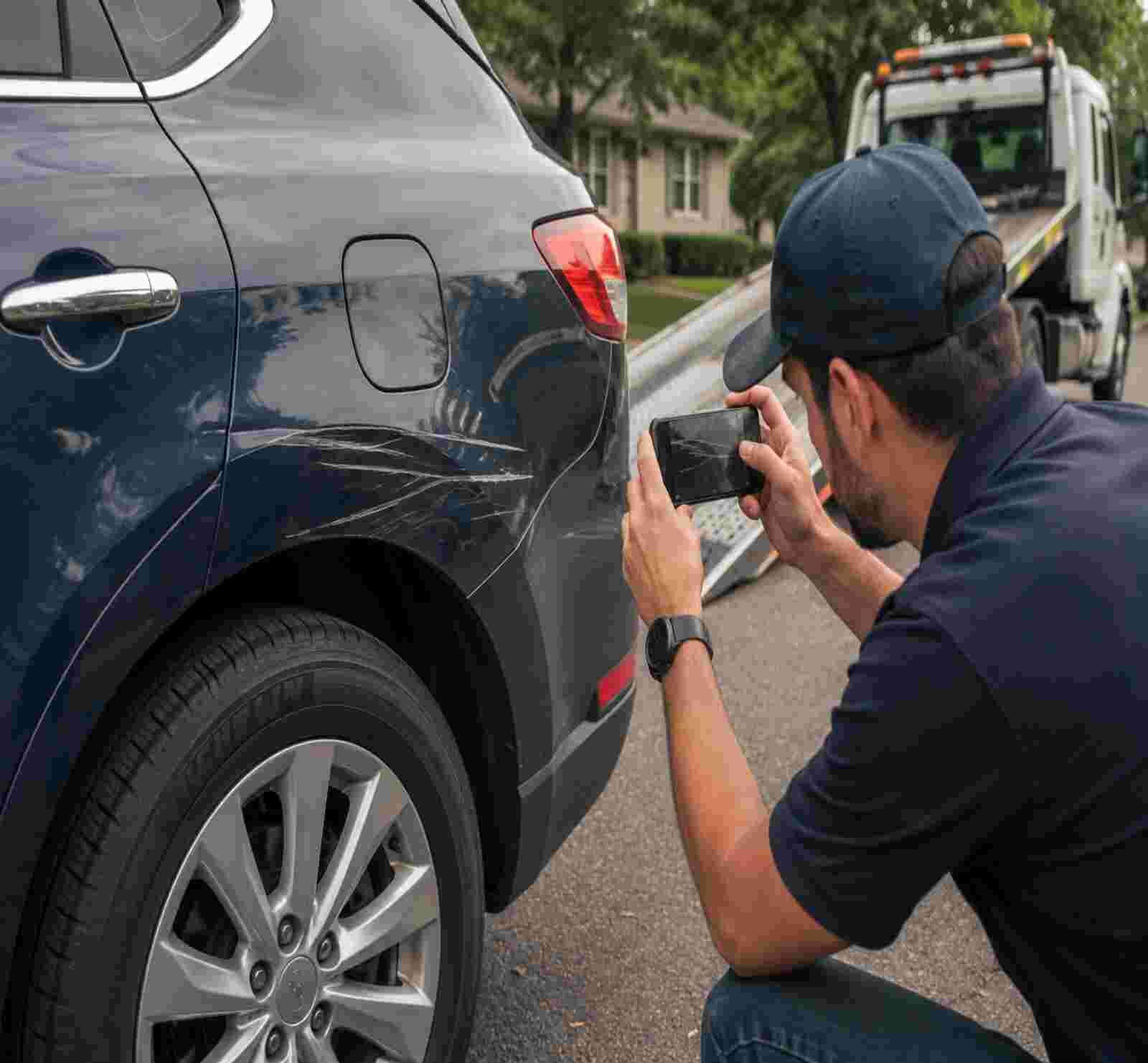
Finding a new scratch, dent, or worse on your car after it rolls off the truck is stressful — especially when you’re not sure who’s responsible or how to get it fixed. The good news: auto transport companies are required to carry cargo insurance, and there’s a clear process for filing a claim. Here’s exactly what to do if your car is damaged during auto transport, step by step.
Quick Summary
- Document damage at delivery, before signing the Bill of Lading, whenever possible.
- Compare the delivery inspection report to the pickup inspection report — this is the single most important piece of evidence.
- Every licensed carrier is required to carry cargo insurance; ask for proof of coverage before you book.
- Most damage claims must be filed within a specific window after delivery, often 24 hours to a few days per carrier policy — check your contract.
- You can escalate unresolved claims to the FMCSA Complaint Center if a carrier isn’t responding.
- Photos, timestamps, and a written notation on the delivery paperwork carry far more weight than a verbal complaint.
Get help from our team if your shipment was damaged
What Is a Car Shipping Damage Claim?
A car shipping damage claim is a formal request submitted to the carrier’s cargo insurance provider for compensation after a vehicle sustains damage while in the custody of an auto transport company. It’s separate from your personal auto insurance — the carrier’s cargo coverage is meant to handle exactly this situation, from pickup to delivery.
Step-by-Step: What to Do If Your Car Arrives Damaged
Step 1: Inspect the Vehicle Before Signing Anything
Walk the full perimeter of the vehicle with the driver before you sign the delivery paperwork (the Bill of Lading). Check the roof, undercarriage where visible, glass, mirrors, and wheels — not just the obvious body panels.
Step 2: Document Everything
Take clear, well-lit photos and video from multiple angles. Timestamp them if your phone doesn’t do it automatically. Photograph:
- The specific damage, close up and from a few feet back for context
- The full vehicle, all four sides
- The VIN and odometer, to confirm it’s tied to your specific vehicle and shipment
Step 3: Note the Damage on the Bill of Lading Before Signing
This is the step people skip most often — and the one that matters most. Write the damage directly on the delivery paperwork before you sign it. A signed Bill of Lading with no noted damage can be used by the carrier to argue the vehicle arrived in the condition you accepted.
Step 4: Compare Pickup and Delivery Inspection Reports
Most reputable carriers complete a condition report at pickup. Lay that report side-by-side with the delivery report (or your own photos) to clearly show what changed during transit.
Step 5: Contact the Carrier or Broker in Writing
Email is better than a phone call here — it creates a paper trail. Include your photos, the noted Bill of Lading damage, and a clear description of what you’re requesting.
Step 6: File a Formal Claim with the Carrier’s Insurance
Ask the carrier for their cargo insurance certificate and claims contact if they haven’t provided it already. Submit your documentation directly to the insurer, not just the carrier, to keep the process moving.
Step 7: Escalate If the Carrier Doesn’t Respond
If a carrier goes silent or refuses to cooperate, you can file a complaint through the FMCSA’s National Consumer Complaint Database. FMCSA regulations require carriers to acknowledge and work toward resolving loss and damage claims within a defined window after they’re filed — a complaint on record can help push a stalled claim forward.
How to File an Auto Transport Insurance Claim
- Gather your documentation: photos, Bill of Lading, pickup inspection report, and any written correspondence.
- Request the carrier’s certificate of cargo insurance if you don’t already have it.
- Submit a written claim to the insurer with a clear damage description and, if possible, a repair estimate from a body shop.
- Keep copies of everything you send and every response you receive.
- Follow up in writing if you don’t hear back within the timeframe stated in your contract.
Common Mistakes That Weaken a Damage Claim
- Signing the Bill of Lading without inspecting the vehicle first
- Only taking photos after the driver has left
- Waiting too long to report the damage — most carriers have a short reporting window
- Relying on a phone call instead of written documentation
- Not requesting the carrier’s insurance information at booking
Broker vs. Carrier: Who Handles the Claim?
| Broker | Carrier | |
|---|---|---|
| Role | Arranges the shipment, matches you with a carrier | Physically transports and is liable for the vehicle |
| Who holds cargo insurance | Typically does not | Required to carry cargo insurance |
| Who you file the claim with | Can help facilitate | The party responsible for the claim |
| Best first contact | Yes, especially if unresponsive from carrier | Yes, for the actual insurance claim |
Tips to Avoid Damage in the First Place
- Choose enclosed car transport for high-value vehicles or long cross-country hauls
- Verify a carrier’s insurance and safety record before booking through FMCSA’s carrier search tools
- Take your own pickup-day photos even if the driver completes an inspection report
- Ask how the vehicle will be secured and positioned on the trailer
Real Stories from Customers
“My bumper had a new scuff when it arrived. Because I’d photographed the car before pickup and noted the damage on the paperwork right there at delivery, the claim was approved within about two weeks.” — Customer, Georgia to New York shipment
“I almost signed off without checking the roof — glad I walked the whole car first. The driver helped me note a small dent before he left, which made the whole claims process straightforward.” — Customer, Illinois to Florida shipment
Call now to speak with a shipping expert about your claim
Frequently Asked Questions
What should I do immediately if my car is damaged during shipping? Inspect the vehicle before signing the delivery paperwork, photograph the damage from multiple angles, and note it directly on the Bill of Lading before you sign.
How long do I have to file a car shipping damage claim? It varies by carrier, but many require notice within 24 hours to a few days of delivery. Check your shipping contract, and report the damage as soon as you notice it to be safe.
Who is responsible for damage — the broker or the carrier? The carrier is typically liable and required to carry cargo insurance. Brokers arrange the shipment but usually don’t hold cargo coverage themselves, though they can help facilitate communication.
What if the carrier denies my claim? You can escalate through the FMCSA Complaint Center, which tracks carrier violations and can prompt a response, or pursue a small claims case with your documentation as evidence.
Does my personal auto insurance cover damage during shipping? Sometimes as a secondary option, but the carrier’s cargo insurance is the primary coverage for damage that happens during transport. Check your own policy for shipping-specific exclusions.
Will noting damage on the Bill of Lading guarantee a claim payout? Not automatically, but it’s the strongest piece of evidence you can have. A clean Bill of Lading with no noted damage makes it far harder to prove the damage happened during transit.
Conclusion
Damage during auto transport is rare, but if it happens, the process comes down to documentation and timing: inspect before you sign, note everything on the paperwork, and file your claim quickly with clear photos. Working with a transparent shipper from the start makes the whole process smoother if something does go wrong.
Had a damage issue or want peace of mind before you book? Get an instant quote or reach out to our team, we’re happy to walk you through carrier insurance before you ship.
Reference
Consumer complaint and claims-resolution guidance sourced from the FMCSA Complaint Center and the National Consumer Complaint Database.