

Last Updated on 2 months ago by Shraddhanvita
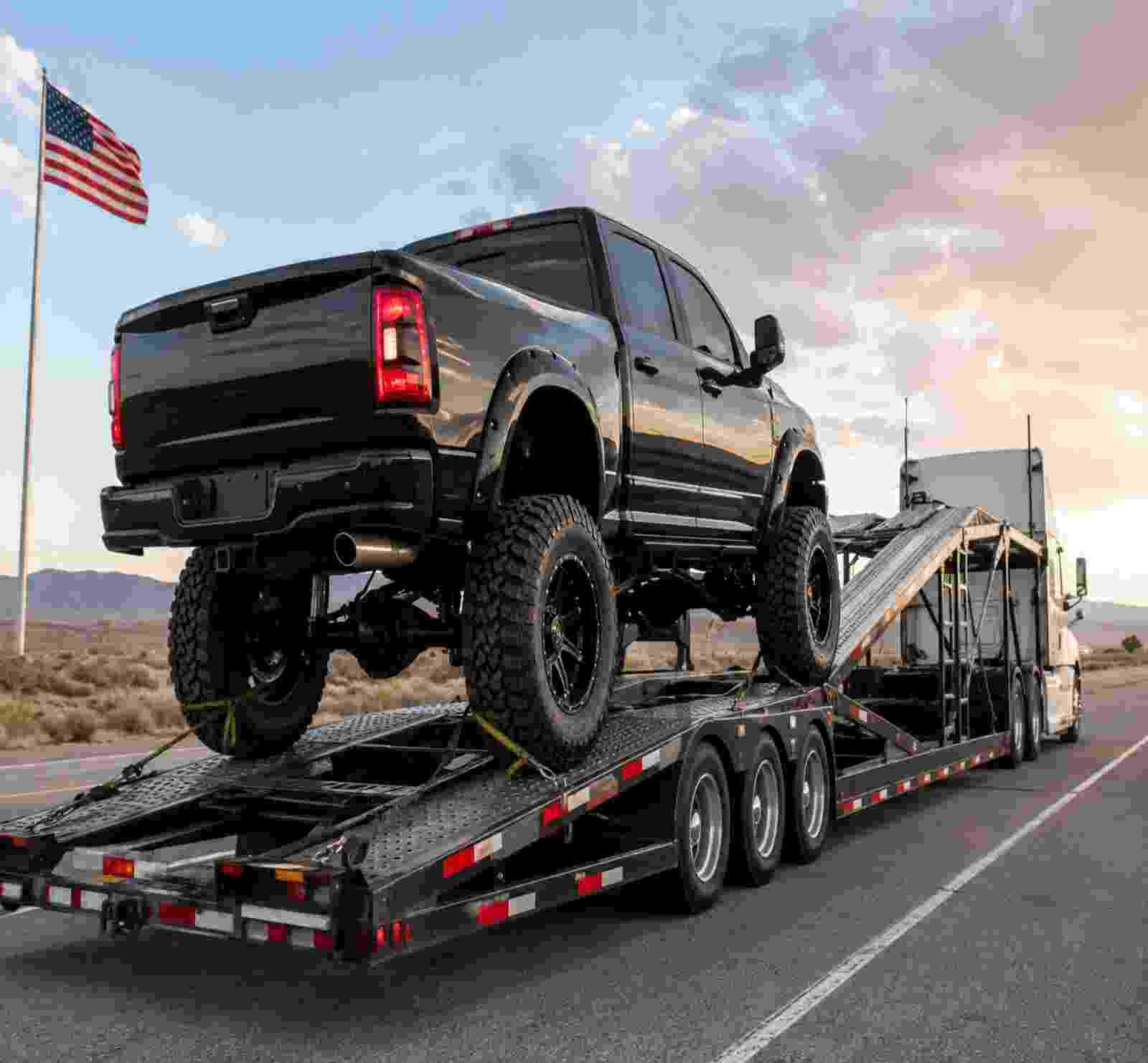
If you’ve built your truck up on 35s or dropped your sedan on coilovers, you already know a modified vehicle doesn’t fit the “average car” box that most auto transport quotes are built around. Height, ground clearance, width, and even how the vehicle loads and unloads can all be different from a stock vehicle — and if a carrier shows up without knowing that, you’re looking at a missed pickup, a rejected load, or a surprise fee added on the spot.
Here’s exactly how to ship a modified or lifted vehicle without any of that, what it actually costs, and what most auto transport companies won’t tell you up front.
Quick Summary
- Lifted trucks and lowered cars almost always need accurate height and ground clearance measurements before booking — not “stock” specs.
- Extra fees for aftermarket vehicles typically range from $50–$300+, depending on how far outside standard dimensions the vehicle falls.
- Lowered vehicles with less than 4–5 inches of ground clearance often need flatbed or lift-gate loading instead of a standard ramp.
- Oversized lifted trucks (roughly 7+ feet tall with a lift kit and larger tires) may require a specialized trailer or open-deck spot built for taller cargo.
- Enclosed transport is worth considering for high-dollar builds, show vehicles, or anything with fragile aftermarket parts.
- Being upfront about modifications when you book avoids day-of-pickup problems and last-minute repricing.
Get an instant car shipping quote with Haulin.ai — modifications and all, priced accurately from the start.
What Counts as a “Modified” Vehicle for Shipping Purposes
Carriers care about anything that changes a vehicle’s dimensions, weight, or loading behavior compared to how it left the factory. That includes:
- Lift kits — even a 2–3 inch leveling kit adds height and can change loading angles
- Lowering kits, coilovers, or “slammed” suspensions — reduced ground clearance is the biggest red flag for carriers
- Oversized tires and wheels — wider tires can push a vehicle outside standard width allowances
- Body kits, wide-body conversions, or aero add-ons — front splitters and side skirts are the most common casualties of a bad loading job
- Roof racks, light bars, snorkels, or bull bars — added height or width that isn’t part of the base vehicle spec
- Non-running or project vehicles — a separate category, but often paired with mods
If your vehicle falls into more than one of these, mention all of it when you request your quote — not just the most obvious one.
How It Works: Booking a Modified Vehicle
- Get an accurate quote. Instead of guessing, use Haulin.ai’s instant quote tool and list every modification: lift height, tire size, added length or width, and current ground clearance.
- Choose the right transport type. Open car transport works for most lifted trucks. Enclosed car transport is the better call for lowered builds, show cars, or anything with vulnerable aftermarket parts.
- Confirm loading method. Ask whether the carrier is using ramps, a lift gate, or a flatbed — this matters most for lowered vehicles with minimal clearance.
- Document everything before pickup. Photograph the vehicle from all angles, including underbody clearance and any existing cosmetic damage.
- Be present at pickup and delivery. Walk the inspection with the driver so measurements and condition are agreed on by both sides before the truck leaves.
Cost Breakdown: What Modified Vehicle Shipping Actually Costs
Base shipping cost is still driven by distance, route, and transport type, but modifications typically add:
| Modification Type | Typical Extra Fee | Why |
|---|---|---|
| Lift kit (4–6 inches) | $50–$150 | Added height, may need taller trailer spot |
| Lift kit (6+ inches) or oversized tires | $150–$300+ | May require specialized or open-deck placement |
| Lowered/slammed vehicle | $75–$250 | Requires flatbed or lift-gate loading, extra time |
| Wide-body kit or added width | $50–$200 | Reduces usable trailer space for other vehicles |
| Non-running modified vehicle | $100–$300+ | Needs winch or forklift loading |
These are general industry ranges — your actual price depends on your specific route, carrier availability, and time of year. Getting a quote based on your real specs, rather than a generic vehicle listing, is the only way to avoid a price change at pickup.
Factors That Affect Pricing Beyond the Mods
- Season and route demand — snowbird season and peak summer months push prices up regardless of vehicle type
- Trailer availability for oversized loads — fewer carriers run trailers tall enough for heavily lifted trucks, which can mean a longer wait for pickup
- Distance and fuel costs — same as any shipment, longer hauls cost more per mile efficiency but more in total
- Multi-car carrier space — a wide or tall vehicle can take up the equivalent of 1.5 “normal” vehicle spots, which carriers factor into price
Tips to Avoid Extra Fees and Delays
- Measure your vehicle’s actual height and ground clearance — don’t rely on the manufacturer’s stock spec sheet
- Disclose every modification at quote time, not at pickup
- Ask specifically whether the assigned carrier has experience loading lifted or lowered vehicles
- For very low vehicles, ask about ramps with adjustable angles or extended approach ramps
- Remove loose aftermarket accessories (light bars, antennas, roof cargo) that could shift or get damaged in transit
- Keep your fuel level low (a quarter tank is standard) to reduce weight and fire risk during loading
Open vs. Enclosed Transport for Modified Vehicles
| Factor | Open Transport | Enclosed Transport |
|---|---|---|
| Cost | Lower | 30–50% higher |
| Weather/road debris protection | None | Full protection |
| Best for | Lifted trucks, daily-driven builds | Lowered show cars, high-value builds, fragile aero parts |
| Loading flexibility | Standard ramps, wide availability | Often includes hydraulic lift gates for low clearance |
| Turnaround time | Faster, more trucks on the road | Fewer carriers, may take longer to book |
Real Stories from Customers
“I’ve got a 6-inch lift with 37s and every quote site I tried before Haulin.ai gave me a price based on a stock truck. When the actual carrier showed up they wanted another $200 on the spot. With Haulin.ai I put the specs in upfront and the price didn’t move.” — Truck owner, Texas to Florida shipment
“My Civic sits about 3.5 inches off the ground. Two other companies flat-out told me they couldn’t load it. Haulin.ai matched me with a carrier that had a lift gate and it went smoothly.” — Modified car owner, California to New York shipment
Text us for a quick estimate on your modified vehicle
Frequently Asked Questions
Does shipping a lifted truck cost more than a stock truck? Yes, typically. Lift kits over 4–6 inches, along with oversized tires, often add $50–$300 to the base rate because of the extra height and trailer space required.
Can a lowered car be shipped without damaging the front bumper or splitter? Yes, if the carrier uses a lift gate or extended ramps designed for low-clearance vehicles. Always confirm loading method before booking rather than assuming a standard ramp will work.
Do I need enclosed transport for a modified vehicle? Not always. Lifted daily-driver trucks usually do fine on open transport. Show cars, low-clearance builds, or vehicles with fragile aero parts benefit more from enclosed transport.
What happens if I don’t disclose my modifications when booking? The carrier may refuse the load at pickup, request an on-the-spot fee increase, or reschedule — all of which cost you time. Disclosing specs upfront avoids this entirely.
How much ground clearance is too low for standard ramps? Vehicles under roughly 4–5 inches of clearance generally need a flatbed or hydraulic lift gate instead of standard ramps.
Will a roof rack or light bar affect my quote? It can, if it adds meaningful height or width to the vehicle. Mention any add-ons over a few inches so the quote reflects the vehicle’s real dimensions.
Conclusion
Shipping a modified vehicle isn’t harder than shipping a stock one — it just requires accurate information up front. Measure your height and clearance, disclose every modification, choose open or enclosed transport based on what you’re protecting, and you’ll avoid the fees and delays that catch most first-time modified-vehicle shippers off guard.
Ready to ship your lifted or lowered vehicle? Get a quote now or contact our team to get started today.
Reference
Federal size and weight standards that shape trailer height allowances and carrier equipment come from the Federal Motor Carrier Safety Administration.

**About the Author — Shraddhanvita Tiwari**
Shraddhanvita Tiwari is an auto transport industry expert specializing in vehicle shipping, auto transport logistics, carrier networks, and the U.S. car shipping market. Her experience in the industry gives her a practical perspective on the factors that influence auto transport pricing, carrier selection, shipping timelines, and the overall vehicle shipping experience. At Haulin.ai, she contributes industry-focused insights designed to make car shipping easier to understand for consumers and businesses.