

Last Updated on 5 months ago by Shraddhanvita
Picture this: you’re sitting on your couch in Chicago, laptop open, credit card in hand — and you’re buying a car that’s physically parked in Phoenix. No test drive. No dealership handshake. No Saturday afternoon wasted haggling under fluorescent lights.
Sound strange? It shouldn’t. Because millions of Americans are doing exactly this right now.
Remote car buying — purchasing a vehicle online from a seller or dealership in another state — has quietly become one of the fastest-growing trends in auto retail. And it’s pulling a whole industry along with it: auto transport. Because here’s the thing — when you buy a car 1,800 miles away, it doesn’t teleport to your driveway. Somebody has to ship it.
That somebody is us. And business has never been better.
In this post, we’re going to break down why remote car buying has exploded, what it means for vehicle transport demand, and — most importantly — what you need to know if you’re buying (or selling) a car across state lines.
Get your instant car shipping quote with Haulin.ai in under 40 seconds — no calls required.
Quick Summary
- Remote car buying has surged, driven by online marketplaces like Carvana, CarMax, and private platforms like Facebook Marketplace and AutoTrader
- More buyers are purchasing vehicles from out-of-state to find better prices, specific models, or avoid local inventory shortages
- Auto transport demand has grown significantly as a direct result of this trend
- Shipping a car cross-country typically costs between $500–$1,500, depending on distance, vehicle type, and transport method
- Haulin.ai’s AI-powered platform matches you with the right carrier instantly — no waiting, no back-and-forth phone calls
Why Are People Buying Cars Remotely in the First Place?
Honestly, if you told someone in 2010 that millions of people would buy cars online — sight unseen, from dealers two time zones away — they’d have laughed. Cars are big purchases. Emotional purchases. The kind of thing you want to feel before you commit.
And yet, here we are.
The shift started slowly, nudged along by better photography, detailed online listings, and vehicle history reports. Then the pandemic hit, dealerships shut down, and suddenly buying a car remotely wasn’t just an option — it was the only option for a lot of people. Habits formed. Trust built. And when dealerships reopened, a whole generation of buyers said, “Actually, I kind of liked doing it that way.”
There are a few other forces at play here too.
Inventory shortages pushed buyers to look further. If your local market has zero used Honda CR-Vs in your price range, but there are 30 of them in Florida — guess where you’re shopping now?
Online platforms made out-of-state buying feel safe. Carvana’s 7-day return policy, CarMax’s detailed inspection reports, and third-party escrow services for private sales all reduced the psychological risk of buying something you haven’t sat in.
Better prices exist in other states. Taxes, demand levels, weather conditions, and regional supply differences mean a car in Georgia might genuinely be $2,000 cheaper than the same model in California. Savvy buyers figured this out.
Specialty and classic vehicles are rare by nature. If you’re hunting for a specific trim level, a rare color combo, or a vintage muscle car — you go where the car is. Simple as that.
What Is Auto Transport — and Why Does It Matter Here?
What is auto transport?
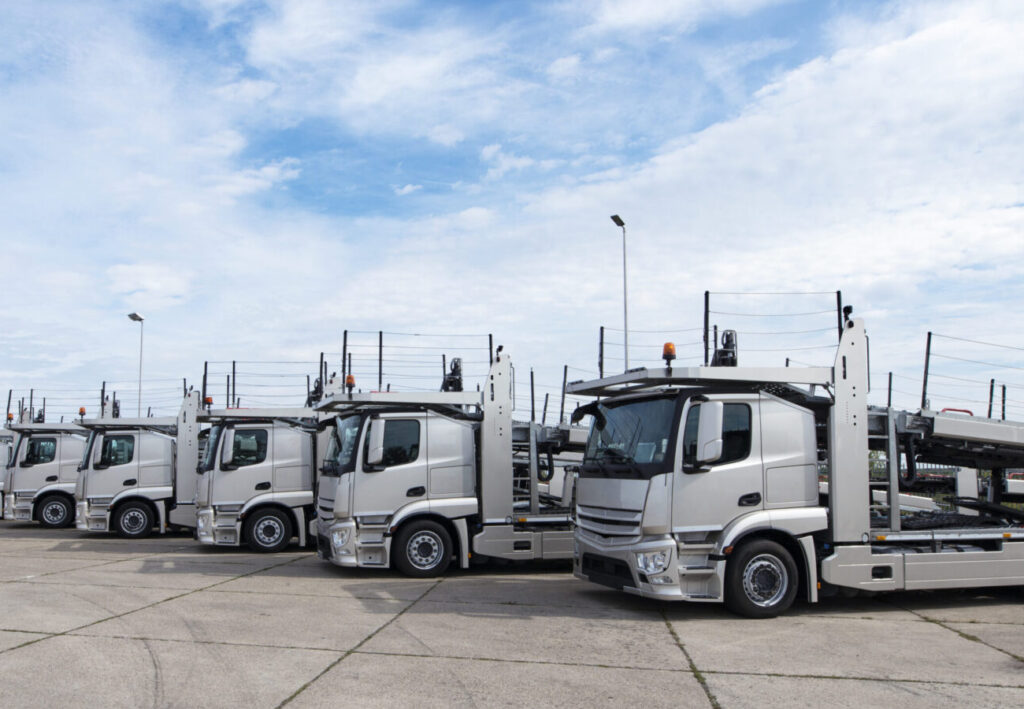
Auto transport (also called car shipping or vehicle transport) is the process of moving a vehicle from one location to another using a professional carrier — typically a large trailer truck. It can be done via open transport (on an exposed multi-car trailer) or enclosed transport (inside a protective trailer, typically used for luxury or classic vehicles).
When someone buys a car remotely, they need a way to get it home. Some people fly out to pick it up and drive it back — which sounds adventurous until you realize you’re spending two days on the highway eating gas station snacks. Most people, understandably, choose to ship it.
That’s where companies like Haulin.ai come in.
We match you with vetted, licensed carriers across the country, get you a competitive price instantly using AI-powered matching, and handle the coordination so you don’t have to make 12 phone calls to sketchy brokers who give you a quote and then ghost you.
The Numbers Don’t Lie: Auto Transport Demand Is Up
Here’s where it gets interesting.
The U.S. auto transport industry has seen consistent growth over the past several years, and remote car buying is a major driver. According to industry estimates, over 17 million used vehicles are sold privately or through online platforms each year in the United States — and a growing percentage of those involve buyers and sellers in different states.
Online auto retail platforms have seen compounded annual growth that’s well ahead of traditional dealership sales. Carvana, for instance, went from selling roughly 18,000 vehicles in 2016 to nearly half a million by the early 2020s. Each one of those transactions — especially cross-state ones — creates a shipping need.
The math is pretty simple. More remote purchases = more vehicles that need to move = more demand for professional auto transport services.
And the trend isn’t slowing down. It’s just finding new lanes.
Who’s Actually Shipping Cars Right Now?
It’s not just car enthusiasts hunting for unicorn vehicles. The typical people shipping cars today include:
First-time buyers who scored a deal online. They found a clean 2020 Camry on AutoTrader for $3,000 under market value — but it’s in Texas and they live in Ohio. Shipping it home still saves them money.
Snowbirds. Retirees (and increasingly, remote workers) who spend winters in Florida or Arizona and summers up north. They ship their cars seasonally rather than drive the same route twice a year.
Military families. PCS moves happen fast. You don’t have time to road trip across the country when you have 10 days to report to a new base. Shipping is the practical choice.
Car dealerships and auction buyers. Commercial buyers at Manheim, Copart, and IAAI auctions purchase vehicles remotely all the time. Getting those cars from auction house to lot is a standard logistics operation.
Relocation moves. Someone taking a new job in Seattle while their car is still in Atlanta. Or a college student heading to school across the country. Life moves people, and their cars need to follow.
How Much Does It Cost to Ship a Car?
Let’s not dance around the question everyone actually has. Because here’s what most companies won’t tell you upfront: pricing in auto transport is genuinely variable, and “it depends” is actually a meaningful answer. But we can give you real ranges.
| Route Distance | Typical Open Transport Cost | Enclosed Transport Cost |
|---|---|---|
| Under 500 miles | $300–$600 | $500–$900 |
| 500–1,000 miles | $500–$900 | $800–$1,300 |
| 1,000–2,000 miles | $700–$1,200 | $1,100–$1,800 |
| Cross-country (2,000+ miles) | $950–$1,500 | $1,400–$2,500 |
Prices vary based on vehicle size, season, route demand, and transport type.
Factors that affect your price:
- Distance — Longer routes cost more, but not always proportionally. Cross-country can sometimes be surprisingly affordable due to high carrier availability on popular corridors.
- Vehicle size — A pickup truck costs more to ship than a sedan.
- Transport type — Open transport is cheaper; enclosed is safer for high-value vehicles.
- Timing and flexibility — If you’re flexible on dates, you can often save money. Rush shipments cost a premium.
- Route popularity — High-traffic routes (e.g., California to New York) have more carriers, which drives pricing down.
- Season — Snowbird season (fall and spring) sees higher demand on Florida and Arizona routes.
Text us for a quick estimate — real numbers, real fast. No spam, no pressure.
Open vs. Enclosed Transport: Which One Do You Actually Need?
Open car transport is exactly what it sounds like. Your car rides on an open trailer alongside 7 to 9 other vehicles. It’s exposed to the elements — road grit, rain, the occasional bug — but nothing that a car wash can’t fix. This is how most new cars get delivered from factories to dealerships. It’s reliable, widely available, and the most affordable option.
Enclosed car transport keeps your vehicle inside a covered trailer. It’s more expensive — usually 40–60% more — but the protection is genuine. This option makes sense for luxury vehicles, classics, exotics, or anything where a paint chip would genuinely ruin your week.
| Feature | Open Transport | Enclosed Transport |
|---|---|---|
| Cost | Lower ($500–$1,500) | Higher ($800–$2,500) |
| Vehicle Protection | Standard | Maximum |
| Availability | High | Limited |
| Best For | Standard vehicles | Luxury, classic, exotic cars |
| Delivery Time | Standard | Standard to slightly longer |
If you bought a used 2019 Toyota Highlander remotely — open transport. If you bought a 1967 Mustang fastback from a collector in California — enclosed, every time.
How the Haulin.ai Process Works
Here’s the thing about traditional auto transport brokers: they’re stuck in 2005. You call them, they take your info, they manually shop it around, and you wait hours (sometimes days) for a quote while they play phone tag with carriers. Meanwhile, you’re just… waiting.
Haulin.ai built something different.
Our AI pricing engine evaluates thousands of carrier routes and real-time market data to match you with the right carrier at the right price — instantly. No hold music. No callback-in-24-hours. No mystery markups.
Here’s how it actually works:
- Get a quote — Enter your pickup and delivery locations, vehicle info, and preferred dates. Takes under 60 seconds.
- Choose your transport type — Open or enclosed, standard or expedited.
- Get matched with a vetted carrier — Our AI identifies the best available carrier for your route and timeline.
- Carrier picks up your vehicle — You get a pickup window, a driver contact, and a vehicle condition inspection report.
- Get Regular Updates — Know where your car is throughout transit.
- Delivery and inspection — Your car arrives. You compare the condition report, sign off, and you’re done.
Unlike traditional brokers, Haulin.ai uses AI to instantly match you with the best carrier at the right price — no back-and-forth calls needed.
Call now to speak with a shipping expert — or skip the call entirely and get your quote online.
Tips for Remote Car Buyers Shipping Their Vehicle
You’ve found the car. You’ve negotiated the price. Now you need to get it home. A few things to do before the carrier shows up:
1. Document the vehicle’s condition before shipping. Request photos from the seller before the car is loaded — ideally timestamped and covering every angle. This gives you a pre-transport baseline.
2. Remove personal items from the car. Auto transport carriers aren’t liable for personal belongings left inside the vehicle. Don’t leave anything you’d be upset to lose.
3. Keep the fuel tank low — about 1/4 tank. A lighter car is easier to load. Full tanks add weight and aren’t necessary for transport.
4. Check the battery and tire pressure. The carrier will need to drive your vehicle onto and off the trailer. Make sure it’s driveable.
5. Note any existing damage on the Bill of Lading. This is the official condition report signed at pickup. Read it carefully. If the driver notes pre-existing damage, make sure it’s accurate before you sign.
6. Book early if possible. The further out you book, the more carrier options are available — which usually means better pricing and more flexibility on dates.
Real Stories: When Remote Buying + Shipping Just Works
A retired teacher from Minneapolis found a clean 2017 Subaru Outback in Colorado — a state that tends to have well-maintained vehicles because of the dry climate and car culture there. She bought it for $4,200 under what anything comparable was selling for locally. Shipping cost her $750. Net savings: over $3,000, plus she got the exact color and trim she wanted.
A Marine sergeant stationed in Virginia needed his truck in California before his PCS was up. He had three weeks. Haulin.ai got it there in eight days, door to door, with real-time updates the whole way.
A small dealership in Nashville uses Haulin.ai for auction purchases regularly. They bid at Copart and Manheim auctions across the Southeast and Midwest, buy 15 to 20 cars per month remotely, and ship them back to their lot on a consistent schedule. The AI pricing keeps their per-car shipping costs predictable and competitive.
These aren’t edge cases. This is just how car buying works now for a lot of people.
FAQs: Remote Car Buying and Auto Transport
How long does it take to ship a car cross-country?
Most cross-country shipments take 7–10 business days. Shorter routes (under 500 miles) can take 1–3 days. Timing depends on carrier availability, route, and your pickup/delivery flexibility.
Is it safe to ship a car I just bought remotely?
Yes — as long as you use a licensed, insured carrier. All carriers on the Haulin.ai network are FMCSA-licensed and carry cargo insurance. Your vehicle is protected throughout transit.
What happens if my car gets damaged during shipping?
All carriers are required to carry cargo insurance. If damage occurs during transport that wasn’t there at pickup (documented on the Bill of Lading), you can file a claim. This is why the pre-transport inspection matters.
Can I ship a car that isn’t running?
Yes. Non-running vehicles can be transported using special equipment. You’ll need to mention this when booking, as it may affect pricing slightly.
Do I need to be present for pickup and delivery?
Not necessarily. You or an authorized person needs to be present for the vehicle condition inspection at both ends. If you can’t be there personally, you can designate someone else to sign off.
How far in advance should I book auto transport?
For the best rates and availability, booking 1–2 weeks ahead is ideal. If you need to ship sooner, expedited options are available — but they cost more.
What’s the difference between a broker and a carrier?
A carrier physically transports your vehicle. A broker (like Haulin.ai) connects you with a carrier, handles the quoting, booking, and coordination, and typically has access to a wider network than any single carrier. Haulin.ai only works with vetted, insured carriers.
Can I track my car during shipping?
With Haulin.ai, yes. You’ll have driver contact info and status updates throughout your shipment so you’re never left wondering where your car is.
Conclusion
Remote car buying isn’t a quirky workaround anymore — it’s just how a significant slice of the market operates now. Better online tools, wider inventory, smarter buyers, and a newfound comfort with buying without being physically present have all combined to make it genuinely normal.
And auto transport is the quiet infrastructure that makes all of it possible.
Whether you bought a specific trim you couldn’t find locally, snagged a deal two states away, or you’re a dealer moving auction inventory — your car needs to get to you somehow. That’s where Haulin.ai comes in: instant AI-powered quotes, vetted carriers, transparent pricing, and a process that doesn’t require you to spend your lunch break on hold.
Ready to ship your car? Get an instant quote with Haulin.ai — it takes less than a minute, and there are zero hidden fees.
Or if you’d rather talk to a real person first: call or text our team directly. We’re not going anywhere.
You might want to check out:

**About the Author — Shraddhanvita Tiwari**
Shraddhanvita Tiwari is an auto transport industry expert specializing in vehicle shipping, auto transport logistics, carrier networks, and the U.S. car shipping market. Her experience in the industry gives her a practical perspective on the factors that influence auto transport pricing, carrier selection, shipping timelines, and the overall vehicle shipping experience. At Haulin.ai, she contributes industry-focused insights designed to make car shipping easier to understand for consumers and businesses.